Picture of By Standard Insights
By Standard Insights

Consumer Brand Discovery France — Market Snapshot 2026

Social media is the top channel for brand discovery in France — but 63% of French consumers require traditional aesthetic advertising, not creator video, to trigger a purchase.

What's inside?

Standard Insights surveyed 549 French consumers — nationally representative across the full territory — on brand discovery behavior, purchase triggers, platform preferences, and video format responses. The study segments the audience into Influencer Buyers (N=224, 41%) and Non-Influencer Buyers (N=325, 59%), isolating the real impact of digital channels on conversion rather than awareness. Brand marketers and media planners will leave with a clear channel allocation framework for the French market: which platforms drive discovery for which demographic, and which formats actually close the sale.

The Spending Shift

Social media has displaced traditional advertising as the dominant discovery channel — 214 respondents cite it as their preferred channel for finding new brands, ahead of traditional advertising at 193. But discovery and conversion are sequential behaviors requiring different tools, and the data shows that most French brands are currently funding one while neglecting the other. The channel finding a customer is not the channel converting them.

The Platform Fragmentation Test

The survey introduced a concrete age-by-platform breakdown that dismantles any single-platform acquisition strategy. Facebook dominates among consumers 35 and older — cited by 58% of 35–54-year-olds and 86% of those 55 and above. TikTok leads among 18–24-year-olds at 46%, with Instagram at 36%. A brand running exclusively on TikTok and Instagram is invisible to the majority of French consumers over 35. These are not adjacent audiences — they operate on entirely separate discovery architectures.

The Brand Battlefield

The attention vs. trust dynamic in France resolves around a single structural finding: 246 respondents out of 549 report discovering no new brand via social media in the last three months. Television retains structural weight at the top of the funnel that social-first strategies have been too quick to abandon. Brands that have fully withdrawn from broadcast are ceding that audience to competitors who have not — and the data shows exactly which consumer profiles are still entering brand awareness through traditional media.

The Buyer Gap

The 62-point gap in social purchase probability — 94% among Influencer Buyers versus 22% among Non-Buyers — is not a content quality problem or a targeting failure. It reflects a genuine behavioral divide between consumers already open to social-driven purchase decisions and those who are not. For the 59% of French consumers in the non-engaged segment, social spend generates awareness that does not convert, because the conversion mechanism for that segment runs through different channels entirely.

The Gender Signal

Women are significantly more likely to cite word-of-mouth as their final decision channel than men — 54% versus 33%, a 21-point gap. For brands whose primary French target is female, a paid social strategy without a recommendation layer is structurally incomplete: the conversion mechanism the audience actually uses is not being funded. This finding contradicts the standard assumption that social content and paid amplification alone are sufficient for female-skewing consumer brands in France.

The Five Consumer Personas

Five consumer archetypes emerged from the data, each requiring a structurally different acquisition approach: the Digital Convert (Influencer Buyer, N=224 — social and UGC-driven, high purchase probability via social channels), the Digital Skeptic (Non-Influencer Buyer, N=325 — word-of-mouth dominant, traditional advertising as trust signal), Generation Z (age 18–24, N=56 — TikTok-first discovery, but 32% still prefer traditional advertising at conversion), the Boomer Prescriber (age 65+, N=137 — Facebook discovery, 82% prefer traditional aesthetic advertising, high purchase intent), and La Consommatrice (female, N=286 — word-of-mouth as primary decision channel, impermeable to influence marketing, paid social alone does not reach the conversion trigger).

How to get the most out of this report

This is an interactive report — not a static PDF — which means you can move directly from a finding to the segment breakdown behind it, rather than reading through full-sample numbers that may not reflect your specific target audience in France.

Here is what to use:

Frame 2087324520 14

Chat with the data

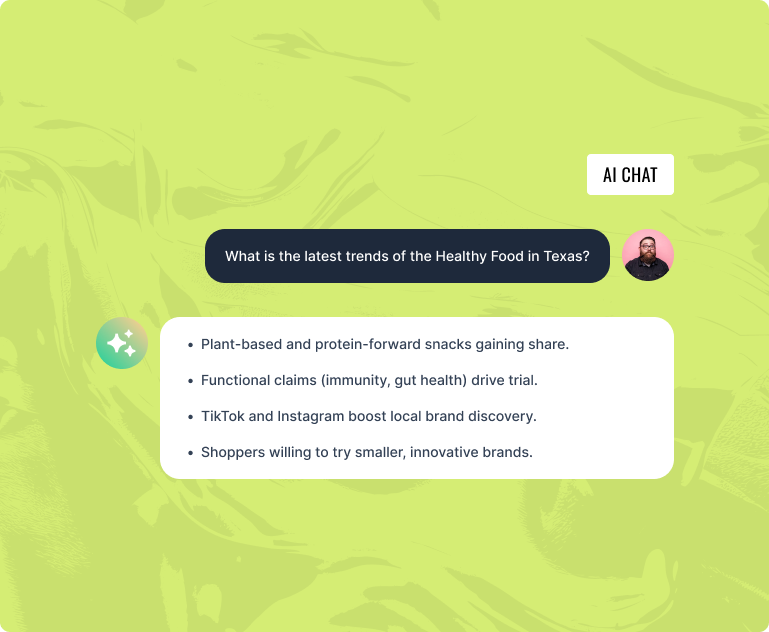
Every section includes an AI assistant button that answers direct questions about the findings. Ask it: "What share of 35–54-year-olds prefer traditional advertising over creator video?" or "How does word-of-mouth rank as a conversion channel for Non-Influencer Buyers compared to social media?" The assistant answers from the data. It does not generate media planning recommendations — that interpretation is yours.

Frame 2087324520 10

Filter and segment

Every finding is filterable by age, gender, and buyer status (Influencer Buyer vs. Non-Influencer Buyer). The full-sample numbers establish the direction. The actionable findings are in the segment cuts — particularly the age-by-platform and format-by-cohort breakdowns, where the divergence between discovery behavior and conversion behavior is most visible. If you are planning spend for a specific demographic in the French market, the filtered view is where the relevant signal is.

About the data

In May 2026, Standard Insights surveyed 549 French consumers — nationally representative across the full national territory — on brand discovery behavior, purchase channel preferences, video format responses, and conversion triggers.

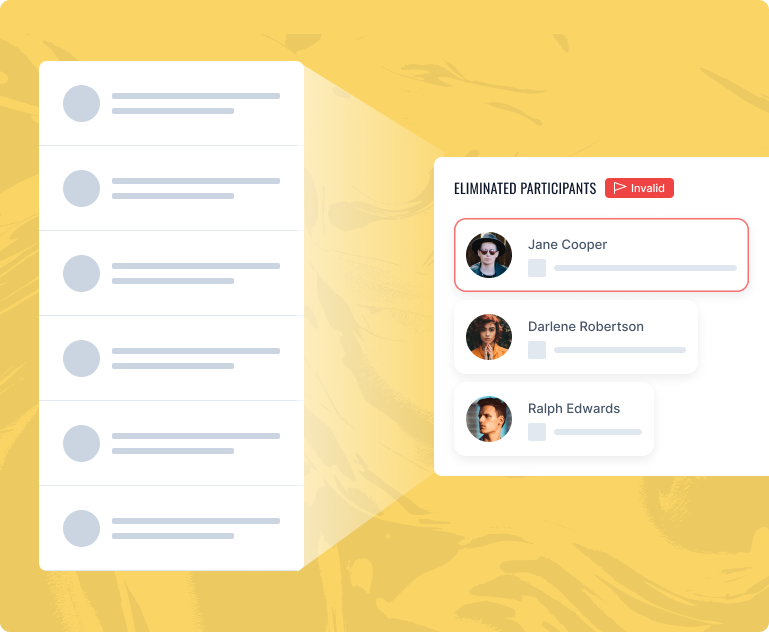
All respondents were adults. The survey was fielded using Standard Insights’ nationally representative panel methodology — no opt-in convenience sample, no social media recruitment bias. To ensure data quality, the survey included attention checks and consistency traps. Respondents who did not pass these checks were excluded from the final analysis. The sample was segmented into two qualified groups: Influencer Buyers (Acheteurs via Influence, N=224, 41% of total), defined as respondents who have previously purchased following exposure to influencer content, and Non-Influencer Buyers (Non-acheteurs via Influence, N=325, 59% of total). Sub-group percentages are calculated as a share of each respective sub-group; all other percentages are calculated as a share of total N (549).

The cross-matrix analysis covers brand discovery format (Format B) and purchase decision channel across all five personas. Cross-tabulations were modeled from a base of complete responses per variable pair; margins were modeled to validate behavioral divergences between segments. Five consumer personas — L’Acheteur Converti, Le Sceptique Numérique, La Génération Z, Le Boomer Prescripteur, and La Consommatrice — were derived from the data and represent distinct acquisition strategies, not demographic quotas.

For a custom study built around your specific brand, category, or consumer segment in the French market, explore Standard Insights or contact the team directly.

ChatGPT Image May 4 2026 01 26 22 PM

More Reports