
The United States is accelerating its renewable energy transition, driven by federal policies like the 2022 Inflation Reduction Act, which allocates $370 billion to clean energy initiatives. Solar and wind power are key beneficiaries, with tax credits and grants incentivizing rapid adoption. Globally, investments in low-carbon energy hit $1.1 trillion in 2022, according to BloombergNEF, while the U.S. clean energy sector is projected to create millions of jobs by 2030.
Yet challenges persist. In February 2023, 60% of U.S. electricity still came from fossil fuels, versus 21.5% from renewables, a disconnect between policy goals and real-world implementation.
How do Americans view this transition?
We surveyed 400+ U.S. adults to explore:
- Familiarity with solar, wind, and hydropower.
- Willingness to adopt renewables.
- Key barriers (cost, awareness, accessibility).
The results offer actionable insights for businesses and policymakers navigating this critical decade for climate action.
Outlook Toward Renewable Energy in the US
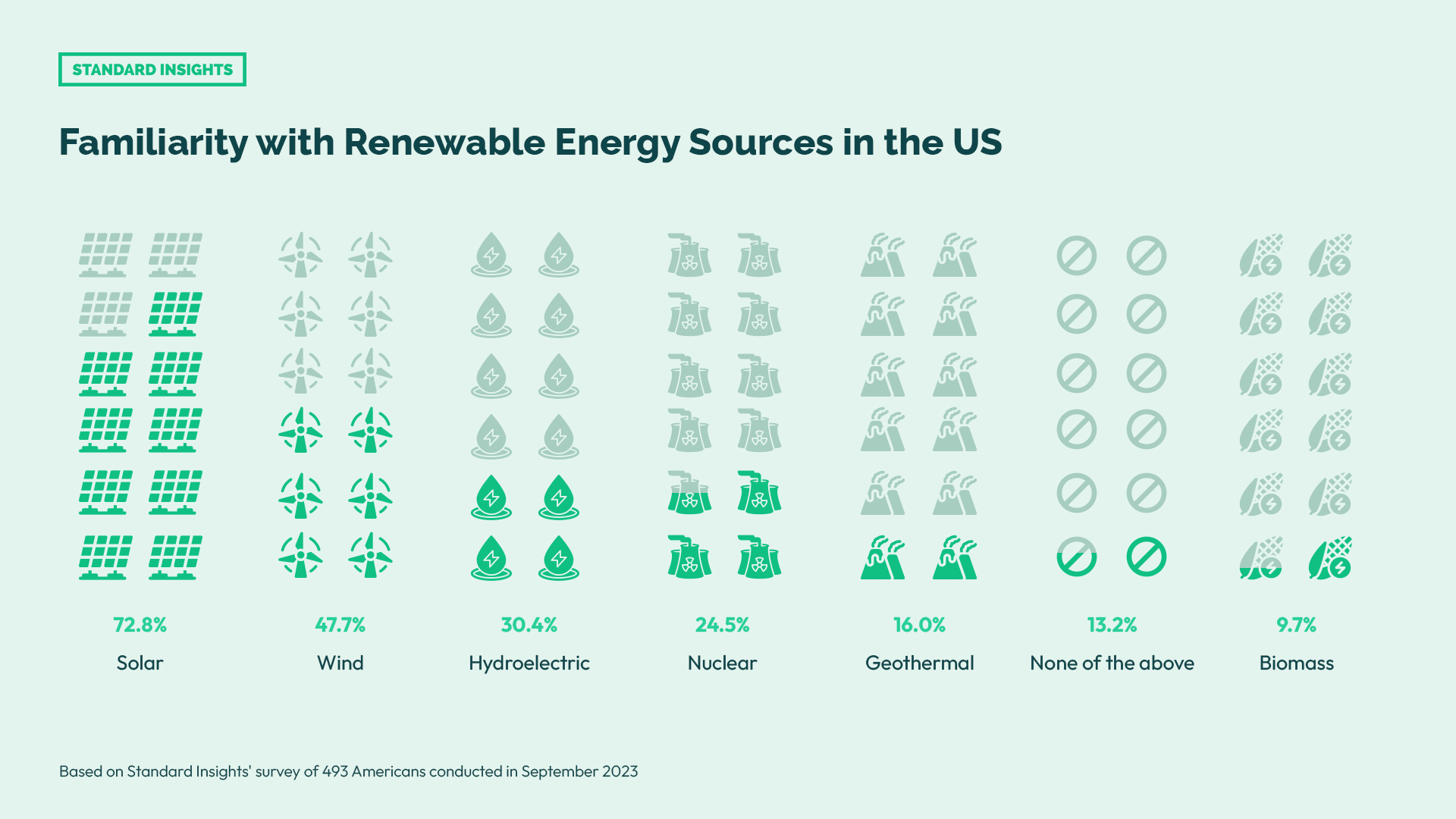
Solar energy is the most recognized renewable source among Americans (73%), followed by wind (48%) and hydropower (30%). However, the U.S. is the world’s second-largest renewable energy producer, trailing only China. Actual usage tells a different story: solar accounts for just 16% of U.S. renewable electricity generation, while wind (48%) and hydropower (29%) dominate. Wind power alone generated 10% of the nation’s total electricity in 2022, underscoring its outsized role. Together, renewables supplied 21.5% of total U.S. electricity in early 2023, per the Energy Information Administration.
The majority of Americans also showed a positive perception of renewable energy in the US. The data reflecting a combined percentage of 64.1% for ‘positive’ and ‘very positive’ responses indicates a prevailing shift in attitudes towards renewable energy in the US.
This shift can be attributed to various factors, including heightened awareness of climate change, increased education about the benefits of renewable energy, and the growing emphasis on sustainable living.
A 2022 study by the Yale Program on Climate Change Communication revealed that younger Americans are becoming more concerned about global warming than they were a decade ago.
Why Americans Want to Switch to Renewable Energy
Current Adoption Trends
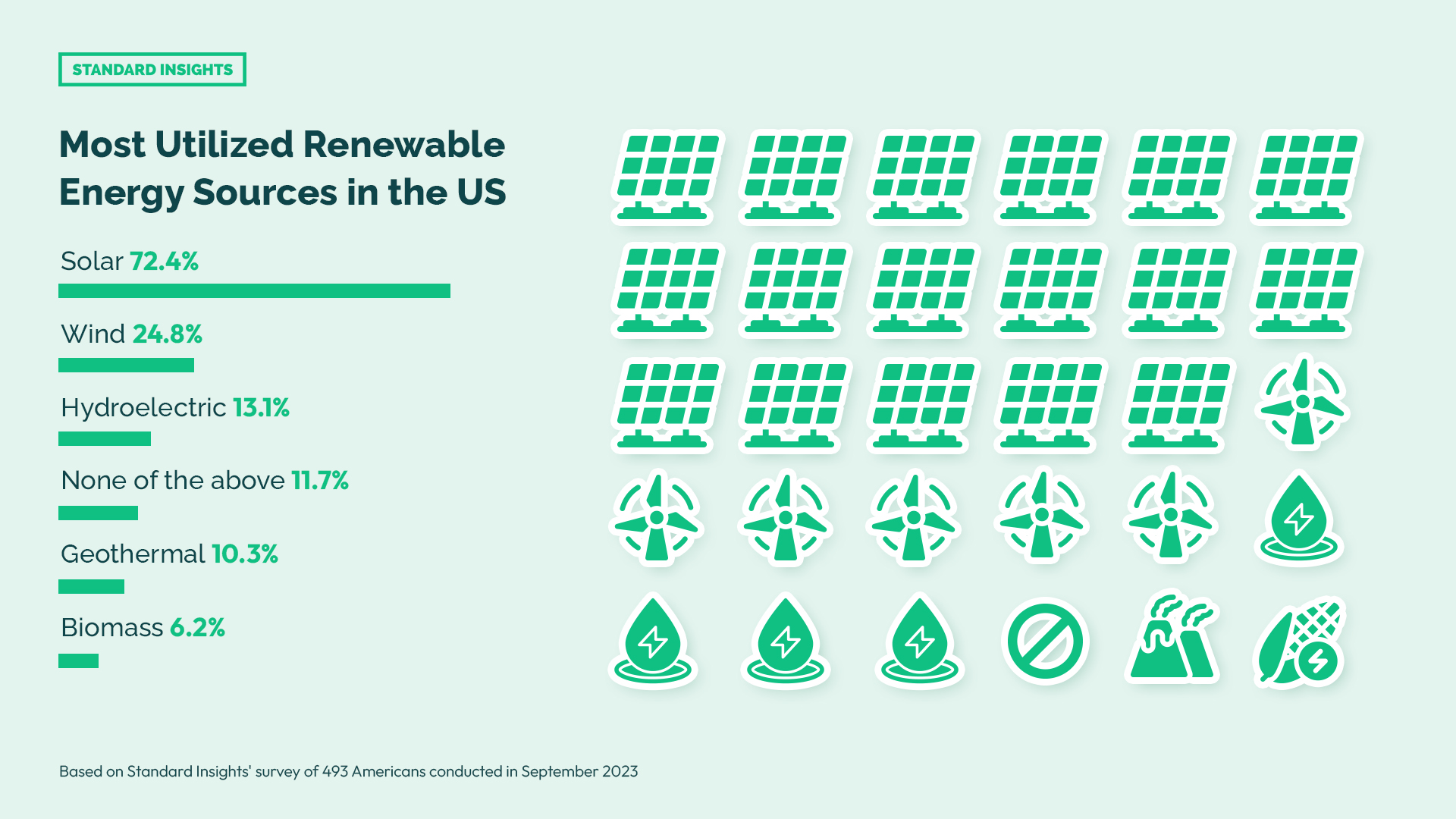
Today, 30% of Americans use renewable energy at home or work—but nearly the same percentage (30%) are unsure whether their energy sources are clean.
Among adopters, 70% rely on solar power, primarily through rooftop panels, highlighting its visibility in residential markets. By contrast, solar accounts for just 16% of utility-scale renewable electricity, reflecting slower institutional adoption.
Sentiment Toward Transition
Public enthusiasm is rising: 32.5% of Americans are open to adopting renewables, while only 7% oppose the idea entirely. Advocacy is even stronger: 66.5% would recommend renewables to others, with 36% being passionate advocates. Resistance is minimal, with less than 10% expressing reluctance.
Key Drivers of Adoption
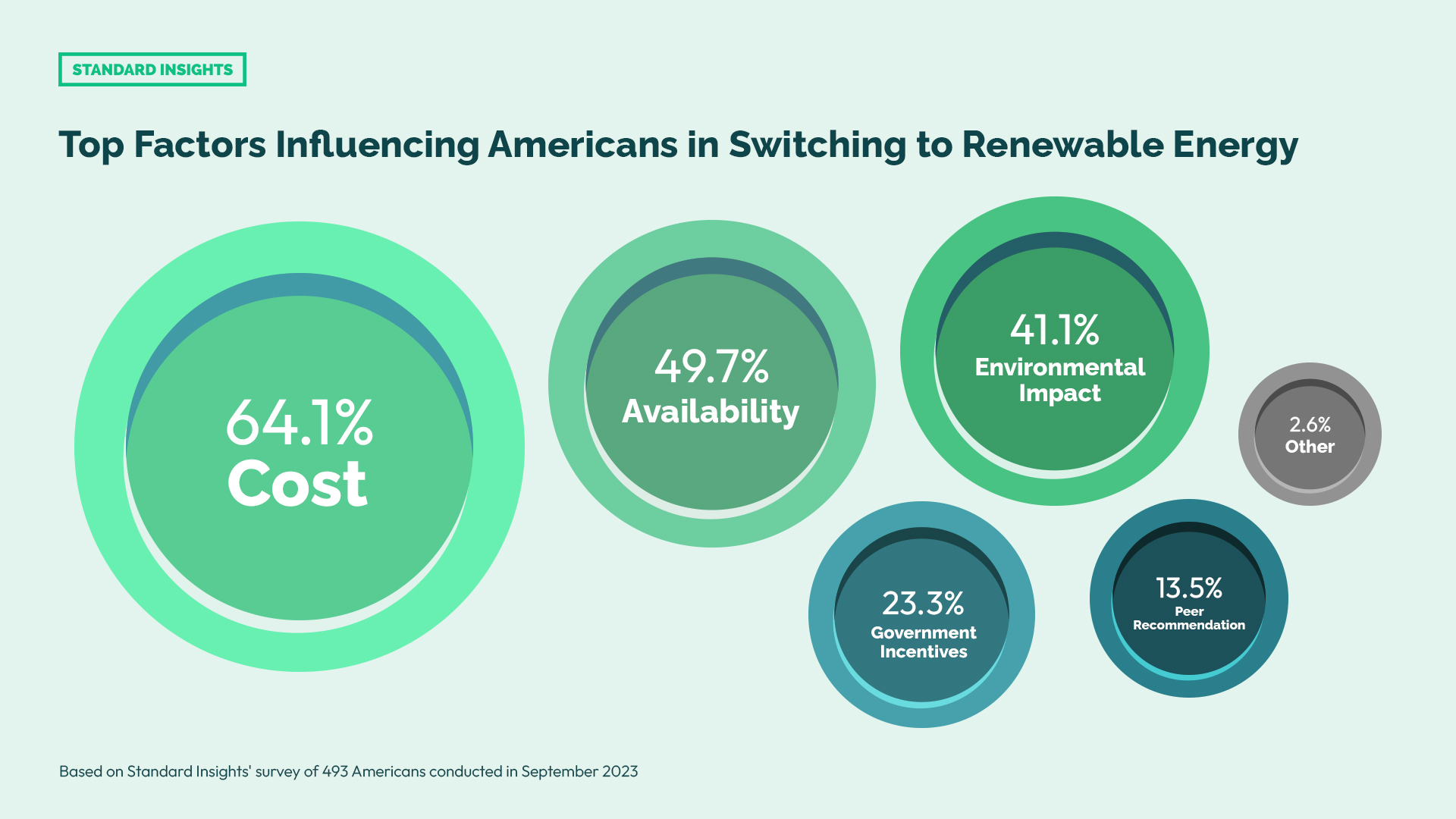
Three factors dominate decision-making:
- Cost (64%): Affordability remains critical.
- Accessibility (50%): Options must be widely available.
- Environmental Impact (41%): Climate concerns influence choices.
This disconnect—strong public support but lagging infrastructure—suggests a cultural shift outpacing systemic change.
Challenges Hindering the Adoption
1. Cost Barriers
44% of Americans cite affordability as the top hurdle. For example, residential solar panel installations cost $4,500–$36,000 (averaging $16,000), with pricing shaped by home size, location, and equipment efficiency (Forbes).
2. Awareness Gaps
1 in 4 respondents lacks basic knowledge about renewable options, while 11% fear technical hurdles like installation complexity or grid integration issues (e.g., inconsistent energy storage).
3. Systemic Inertia
While households embrace rooftop solar, utility-scale adoption lags. Bridging this gap requires simpler processes, public-private partnerships, and consumer education campaigns.

To Wrap Up
The U.S. energy landscape is changing rapidly. Federal investments like the Inflation Reduction Act, which dedicates $370 billion to clean energy, are accelerating this shift. But while policymakers debate solutions, Americans are already forming strong opinions: 64% view renewable energy positively, and over a third would actively recommend it to others.
The stakes for businesses are clear. Our survey highlights three priorities for consumers:
- Lower costs (64% cited affordability as a key factor).
- Clearer information (24% struggle with accessibility or awareness).
- Simpler adoption (11% need technical support).
Younger generations are driving demand, with 36% “very likely” to advocate for renewables. For companies, this isn’t just about ethics; it’s economics. Brands that cut costs, demystify green tech, and highlight environmental benefits will win trust in a crowded market.
Yes, fossil fuels still dominate 60% of U.S. electricity generation. But public sentiment is shifting faster than infrastructure. Businesses that act on these insights now won’t just follow trends, they’ll set them.
Looking for more insights? Check out Consumer Report United States 2025.