
Overview of Tobacco Use in Malaysia
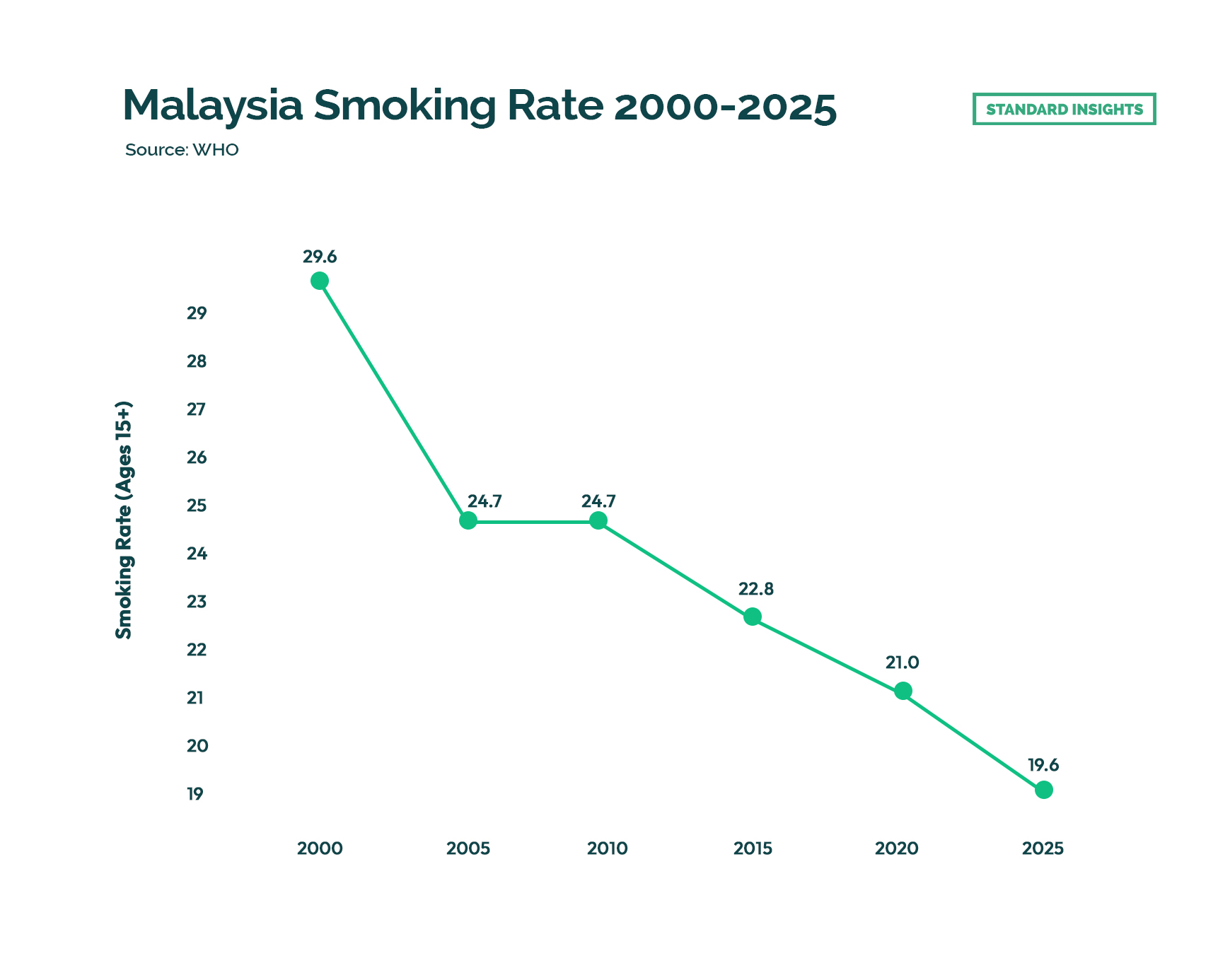
Tobacco use in Malaysia has been declining in recent years. According to the World Health Organization’s Global Report on Trends in Prevalence of Tobacco Use 2000-2025, prevalence rates of tobacco use among people aged 15 years and older in Malaysia decreased from 29.6% in 2000 to 22.8% in 2015 and are expected to drop even further to 19.6% by 2025.
Despite making notable strides in reducing tobacco use in Malaysia, the country is still unable to meet the 15% target established for 2016-2025 by its National Strategic Plan for Non-Communicable Disease. More work needs to be done if Malaysia is to reach this target figure.
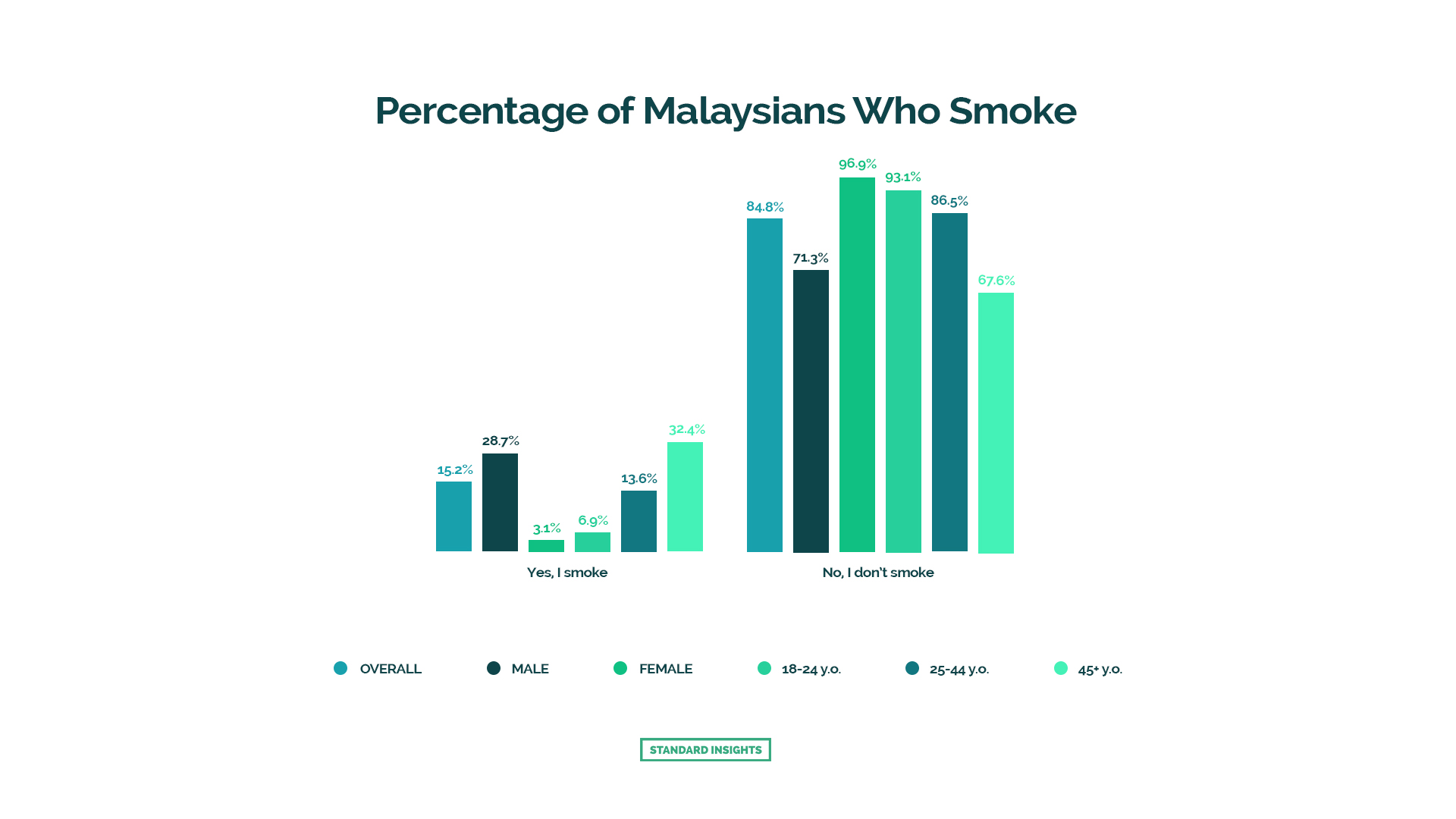
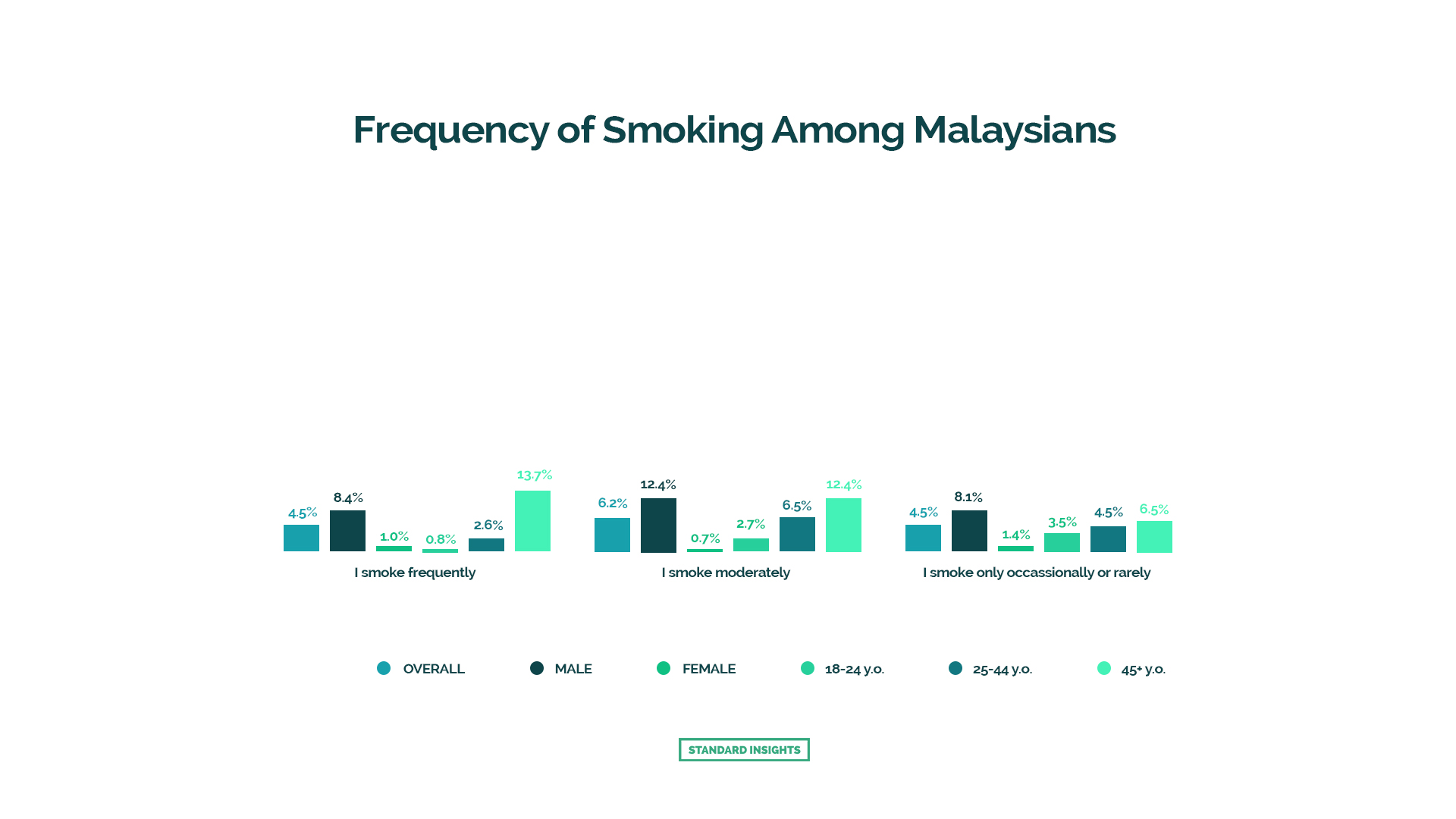
We regularly conduct Market Research in Malaysia, and we have found that tobacco use in Malaysia is a hot and controversial topic owing to its potential for severe health consequences. According to our latest survey in Malaysia in November 2022, 84.8% of respondents do not smoke, in comparison to 15.2% who do. Notably, 4.5% of smokers smoke frequently, 6.2% moderately, and 4.5% either occasionally or rarely.
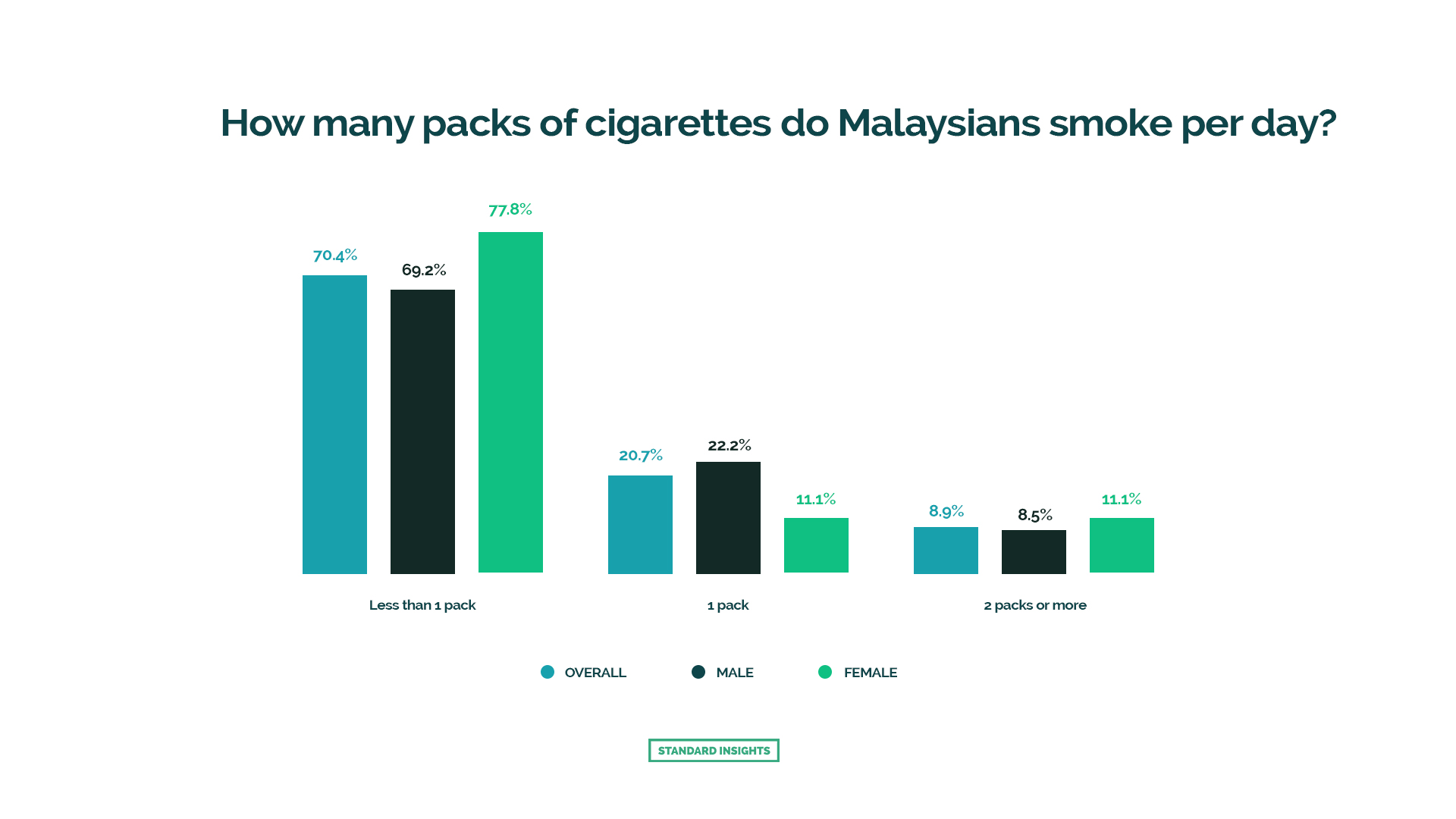
Moreover, of those survey-takers who do smoke, the majority (70.4%) smoke less than a pack per day, with 1 in 5 (20.7%) smoking 1 pack daily. This follows the trend of cigarette smoking remaining one of the most common forms of tobacco use in Malaysia today, despite the prevalence of other forms, such as vapes and e-cigarettes, which have gained popularity over recent years.
Consequently, the Malaysia e-Cigarette Market Report 2022 revealed that although the largely unregulated tobacco market still presents a significant problem in the country, the average starting age for smoking has decreased in recent years.
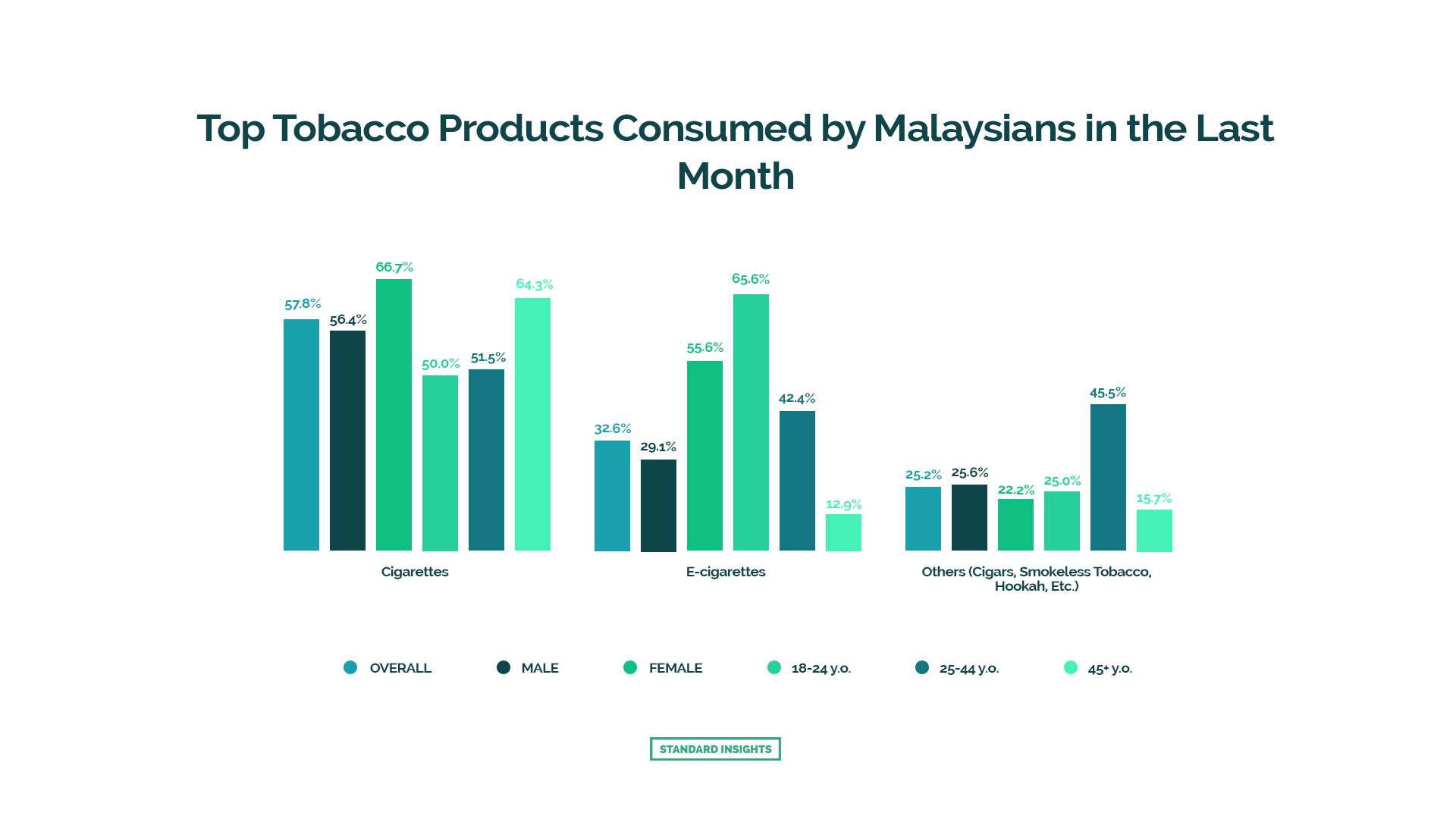
Standard Insights’ study also revealed that cigarettes (57.8%) were the tobacco product that respondents consumed the most followed by e-cigarettes (32.6%). Older respondents (those over 45) smoke cigarettes more frequently (64.3%), whereas younger respondents (those between 18 and 24) prefer e-cigarettes more (65.6%).
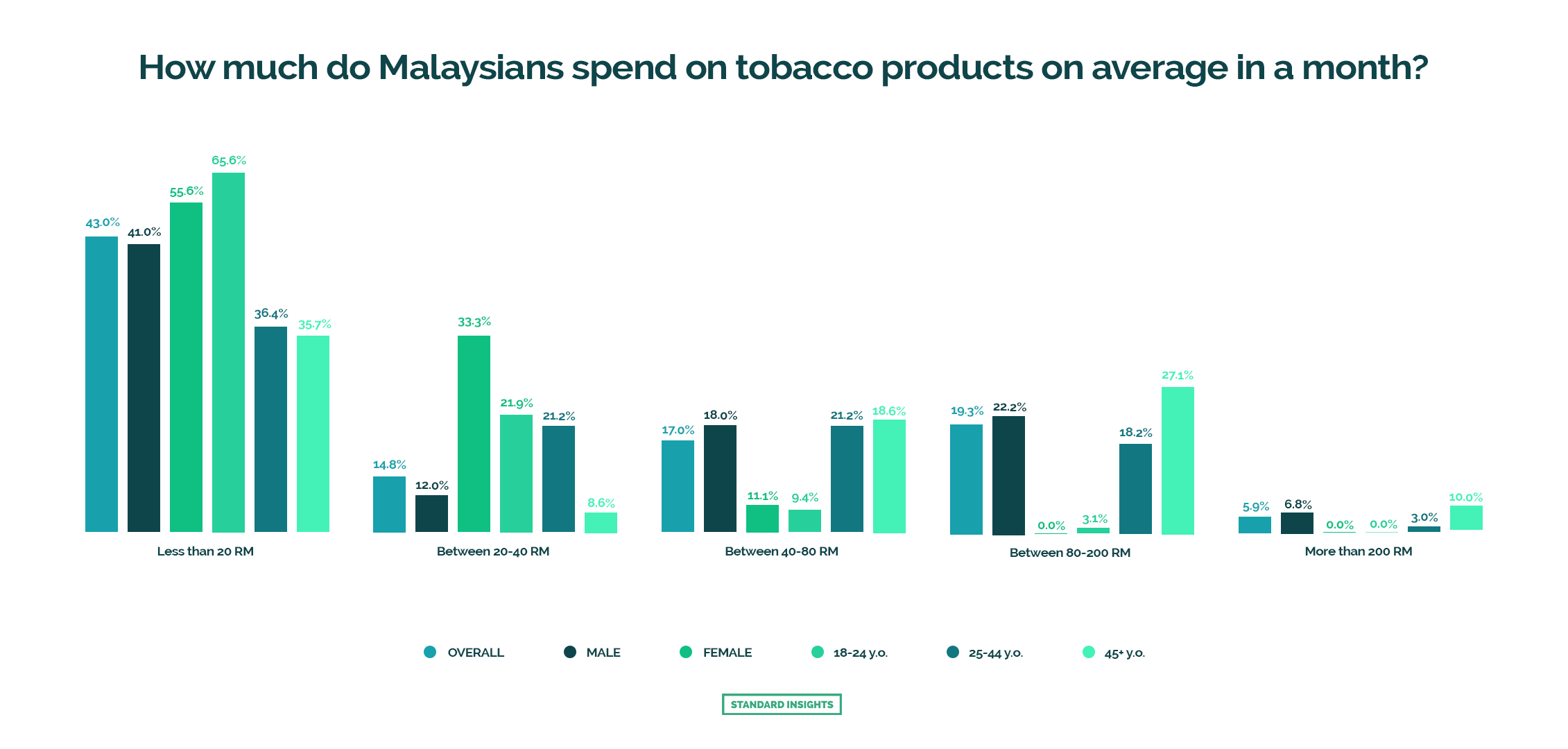
Furthermore, 43.0% of the participants spend less than 20 RM per month on tobacco products. Typically, those above the age of 45 are far more likely to spend money on tobacco products than the other 2 age groups.
The Prevalence of E-Cigarettes Among Young People in Malaysia
The popularity of e-cigarettes among Malaysian youth has been a source of concern for many public health authorities and parents. These battery-powered devices have grown significantly over the years, with many young people using them as an alternative to traditional cigarettes.
E-cigarettes heat a nicotine-filled liquid to create an aerosol that the user inhales. Although they do not contain tobacco, they contain other dangerous chemicals, such as formaldehyde and carcinogens which can pose serious health risks to those who smoke them.
Aside from the immediate health dangers caused by these substances, there is also evidence that e-cigarette use may act as a gateway to traditional cigarettes for young smokers. Studies have found that young people who try e-cigarettes are more likely to report trying regular smoking within the same year than those who have never tried e-cigarettes before. This suggests that e-cigarettes introduce many young people to smoking traditional cigarettes.
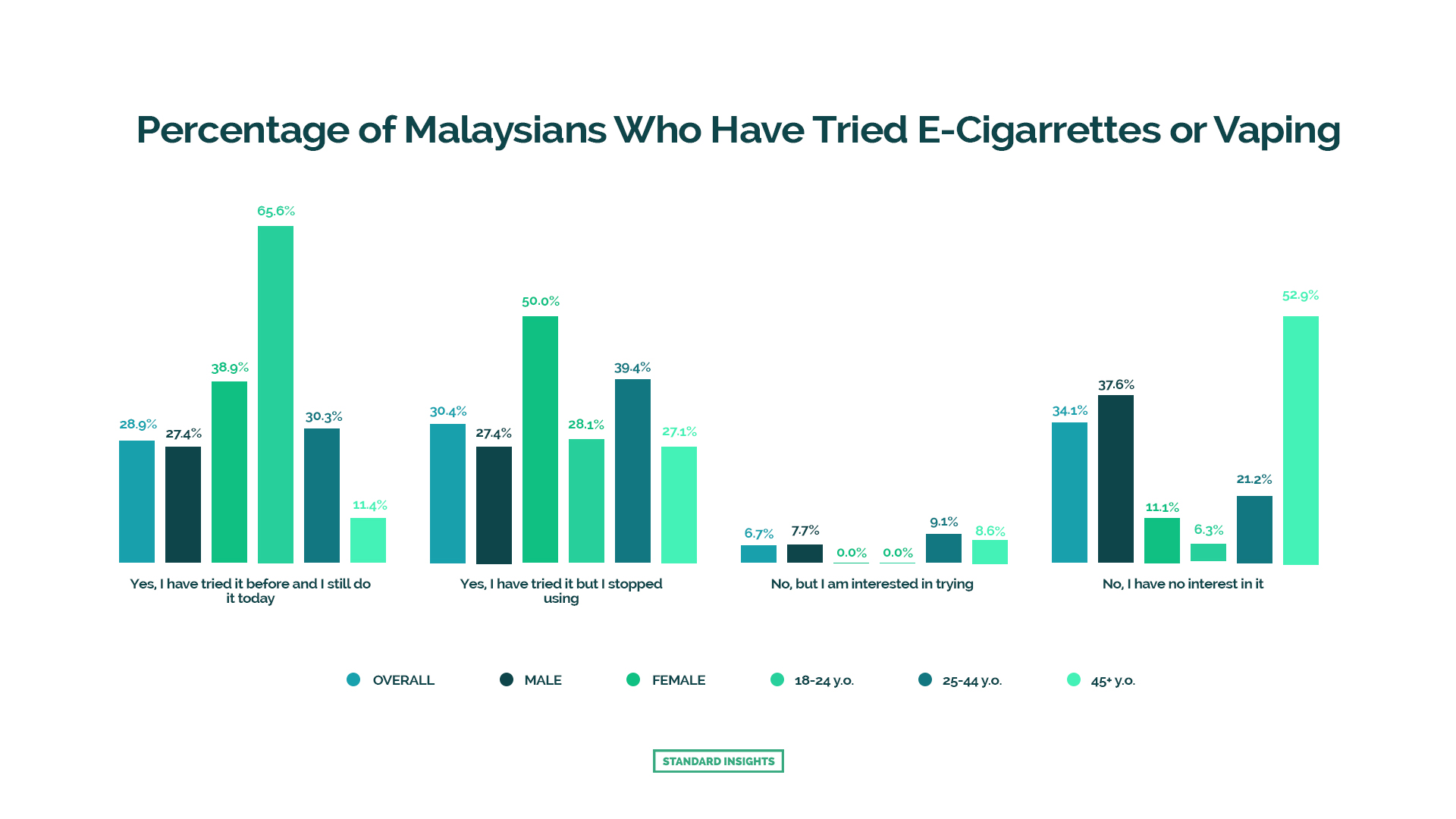
Similarly, our recent study found that 65.6% of smokers who are aged 18-24 have tried and continue to use e-cigarettes. Besides that, other groups have expressed that to have not used e-cigarettes or vaping before and have no interest in trying them. Meanwhile, some of them have tried vaping but have since stopped.
4 Factors Driving the Increase in E-Cigarette Usage Among Young People in Malaysia
The popularity of e-cigarettes among young people in Malaysia cannot be overlooked. Many factors are driving this rapid increase in usage, including socioeconomic status, high availability, perceived health benefits, and peer influence.
1. Socioeconomic Status
One of the primary drivers for the increased use of e-cigarettes among young people in Malaysia is their socioeconomic status. It has been observed that the poorer segments of society are more likely to buy these cigarettes due to their relatively low cost compared to traditional tobacco products. Additionally, this segment seems to be more likely to be exposed to promotional campaigns through social media or other channels offering discounts and promotions on these products. This is further supported by surveys indicating that a greater proportion of teenagers from lower-income households use them than those from higher-income households.
2. High Availability
Another factor contributing to the growing popularity of e-cigarettes among Malaysian youths is their high availability. Several stores, particularly those located near schools and universities across the country, sell these cigarettes at an increasingly affordable price. There are also online shops and mobile apps where these products can be purchased conveniently with just a few clicks. The ease and convenience with which young people can purchase these cigarettes have made them more popular than ever.
3. Perceived Health Benefits
Furthermore, many young people believe e-cigarettes offer certain health benefits compared to traditional tobacco products. This perception has created a notion that vaping is safe and beneficial for health and well-being. While research into the actual effects of vaping on human health is still ongoing and inconclusive, inevitably, this misconception about vaping being beneficial has contributed to its increased use by young Malaysians today.
4. Peer Influence
Finally, peer influence is another factor driving the increase in e-cigarette usage among Malaysian youths. Many teenagers are drawn to vaping as a result of their friends and peers doing it. Thus, social norms and peer pressure have resulted in an increased uptake of these products by young people in Malaysia who want to fit in and be seen as “cool” or “trendy”.
Malaysia Government’s Efforts To Reduce Youth Vaping
Industry players acknowledge that vaping is not risk-free. However, there is growing scientific evidence that it is less harmful than smoking cigarettes.
Risk-proportionate rules and taxation for vaping are being proposed to encourage smokers to transition to a low-risk alternative. With the Malaysian Government introducing taxation on nicotine vapes, many in the vaping industry are exhaling a sigh of relief as the grey line lingering over nicotine taxation has loomed for the longest time.
The Malaysian government has received public commendation for its sensible approach to vaping regulation rather than prohibition. This represents a decisive victory in the global war against smoking-related health issues, with e-cigarettes proving an effective way of helping smokers reduce their risk and improve their overall well-being.
Malaysia towards regulating vape products
The nation must create proper regulations governing vaping products to ensure consumer safety and benefit from much-needed tax revenue effectively. This comes following concerns about a potential rise of black market operators who would profit from selling substandard, illegal vapes, which could pose health risks if consumed or inhaled.
It is in the nation’s best interest to quickly roll out proper regulations to benefit the Malaysian economy as it could lose an estimated RM1 billion in tax revenue from vape products alone, being too substantial to remain unregulated.
Key Takeaways
In conclusion, e-cigarettes have become increasingly popular among young people in Malaysia. Several factors are driving this surge in the usage of e-cigarettes among Malaysian youths. These include promotional campaigns, high availability, perceived health benefits, and peer influence. The Malaysian Government is making efforts to reduce vaping among youths by introducing taxation on nicotine vapes and creating regulations governing vape products. This will not only benefit the government financially but also help protect consumers from potentially harmful black-market products. With proper regulation of these products, the nation can create a safer environment for its citizens while reaping the economic benefits from this growing industry.