








Will it work?
Know before you spend.
Test it with real consumers first, and get back a straight answer: deploy it, fix it, or drop it.
Usually ordered when: new products, packaging, or messaging need real reaction before committing budget or moving to production.
If you can show it, you can test it.
Anything a consumer would see. Up to four versions in one study, so you find out which one wins rather than whether one is acceptable.
Product ideas
A new product, a variant, a format change - before tooling or production.
Service concepts
A new offer, tier, or model, described the way a customer would encounter it.
Messaging and taglines
Which line lands, which one is believed, and which one people repeat back.
Ads and creative
Static, video, or a full creative territory - before it goes anywhere near a media plan.
Logos and visuals
Identity, packaging, key visuals. What they signal, not just whether people like them.
Names
How a name is read, what it suggests, and whether it survives first contact.
The answer sits on one screen.
The report doesn't open on a methodology note. It opens on a verdict, with the number that produced it right beside it. Everything else is there for whoever wants to challenge it.
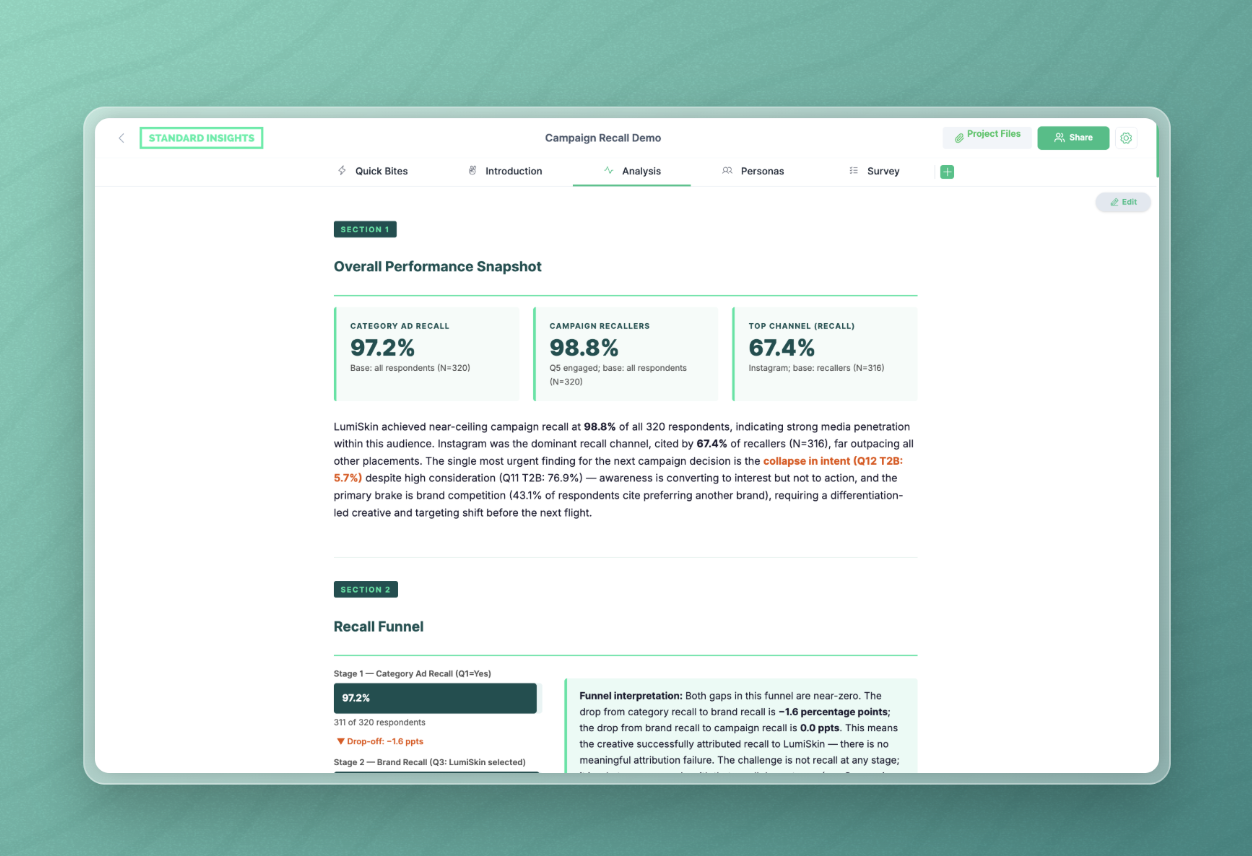
Yes, one of the three is "don't run it". A study that can only ever agree with you isn't worth ordering.
Six reads, and the reasoning behind them.
Enough to defend the verdict in a meeting without opening anything else - and if someone does want to dig, the full report is underneath.
The executive call.
- Named verdict: Deploy, Refine, or Don't Run
- Benchmark scores vs category thresholds
- First impression & emotional read
Target audience reaction.
- Demographic & category behavior cuts
- Buyer personas built from verbatims
- Segment-by-segment strength comparison
Deep-dive evidence.
- Full response distributions for every question
- Analyst synthesis connecting quant & qual
- Exportable tables & raw dataset access
01 - First impression
The gut reaction in market.
What people felt before they had time to be reasonable about it - positive, neutral or negative, split out. The gut reaction is usually the one that shows up in market.
02 - Emotional association
What it makes them feel.
The words respondents actually picked, ranked. Not whether they liked it, but what it made them feel - including the words you'd rather they hadn't chosen.
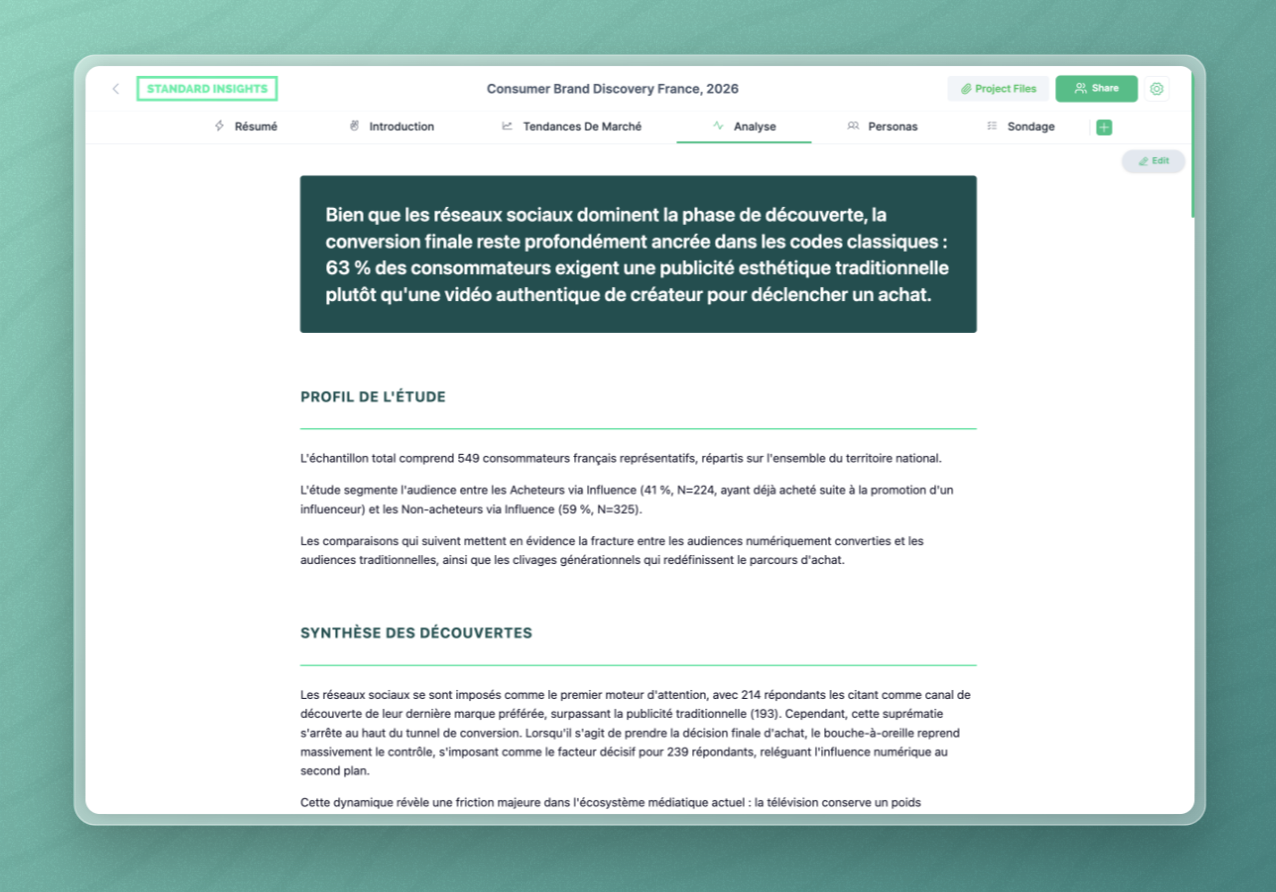
03 - Core metrics
Four metrics that decide it.
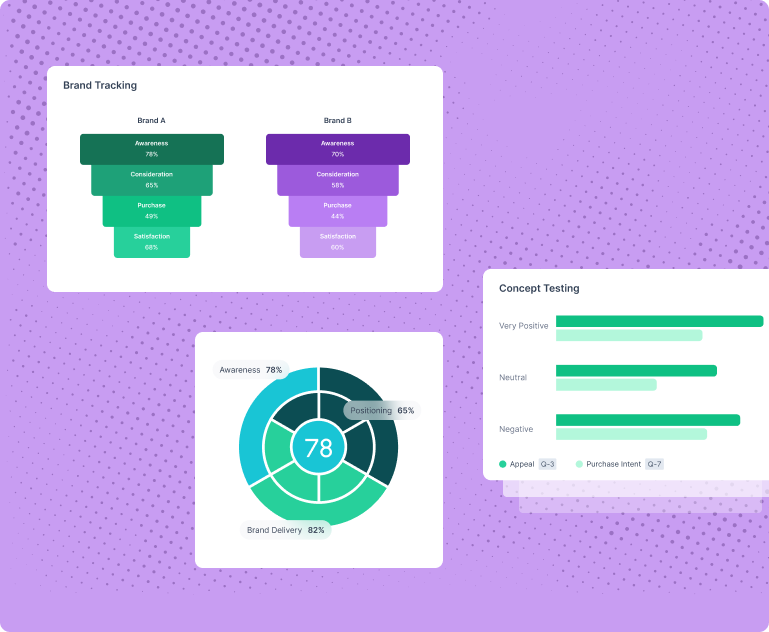
Appeal, message clarity, relevance and brand fit, each with a top-two box score and a mean. A concept can be loved and still fail on clarity, which is exactly the case you want to catch.
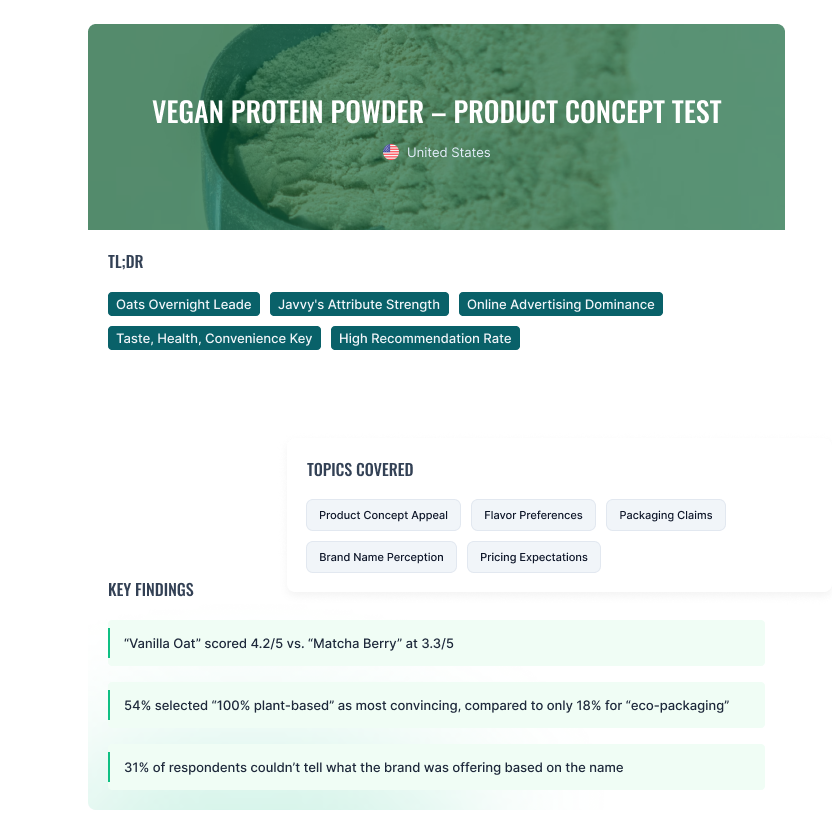
04 - Strengths
What to protect.
What people liked most, ranked - so the thing that's working can be protected when the creative goes back for a round of changes.
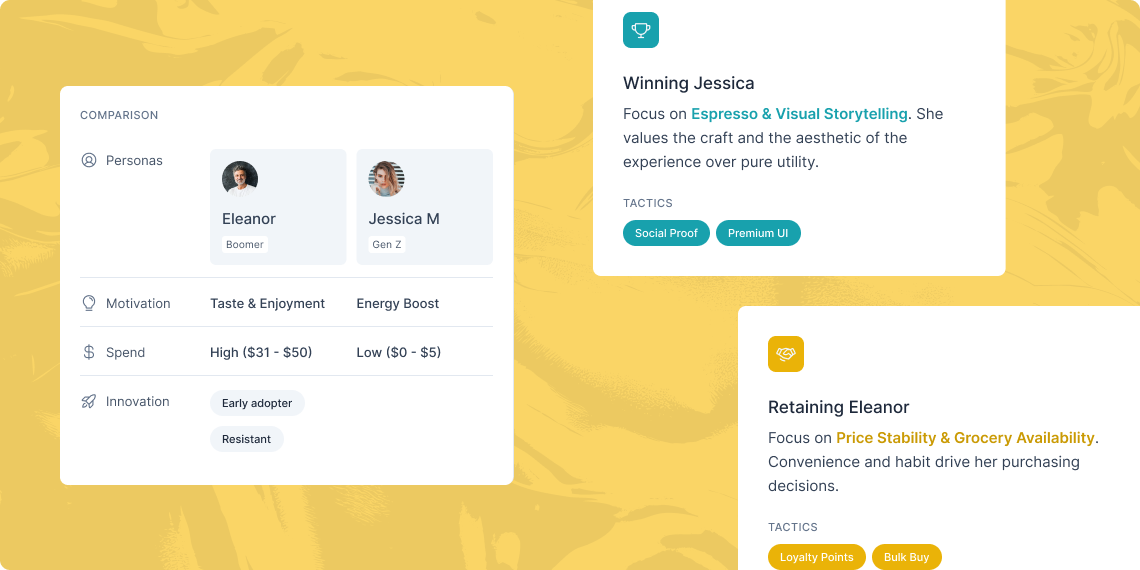
05 - Opportunities
The brief for version two.
What they'd improve, in their own terms. This is the brief for the next version, written by the people you're selling to.
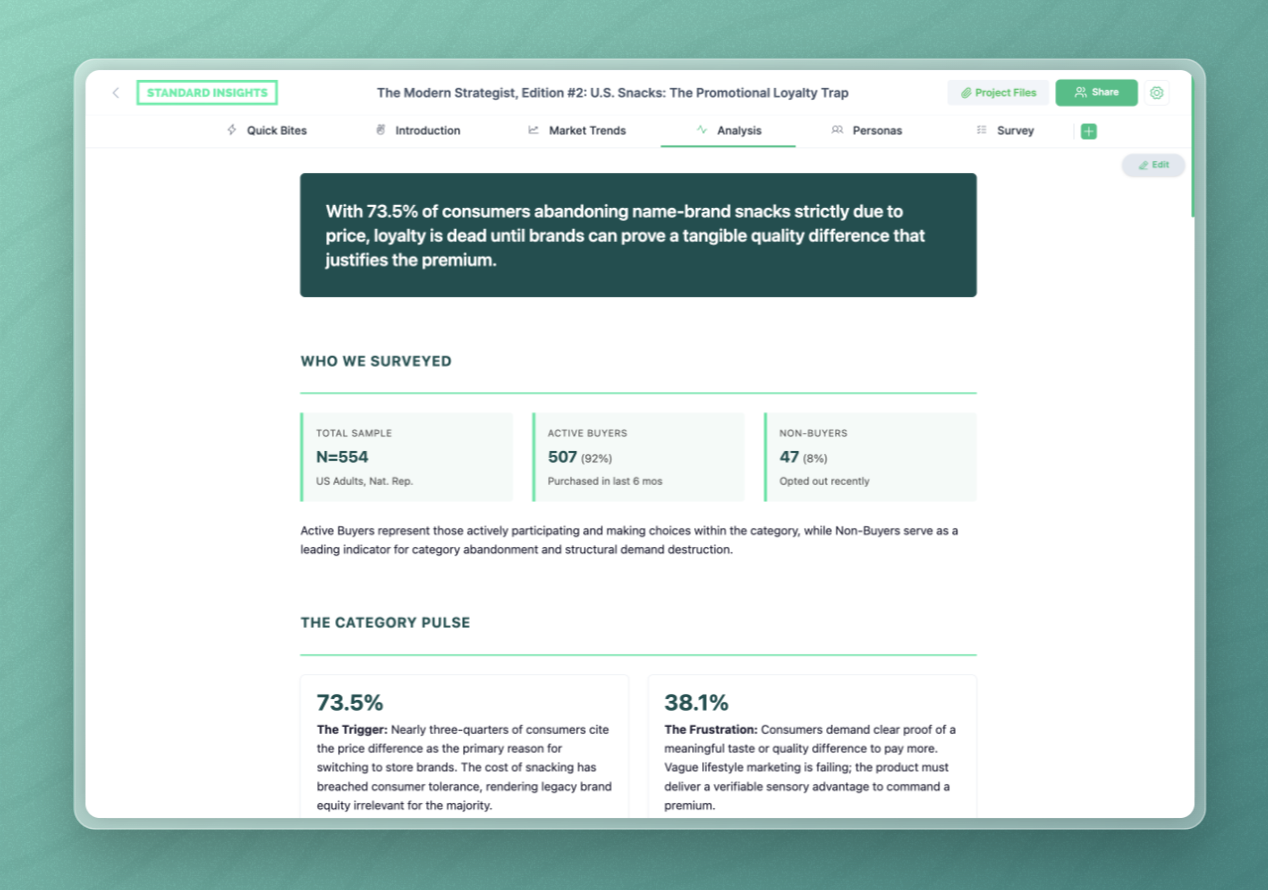
06 - Analyst notes
The human synthesis.
A written read of what the numbers mean together, by a person. Where the scores split, what that pattern usually indicates, and what to do about it.
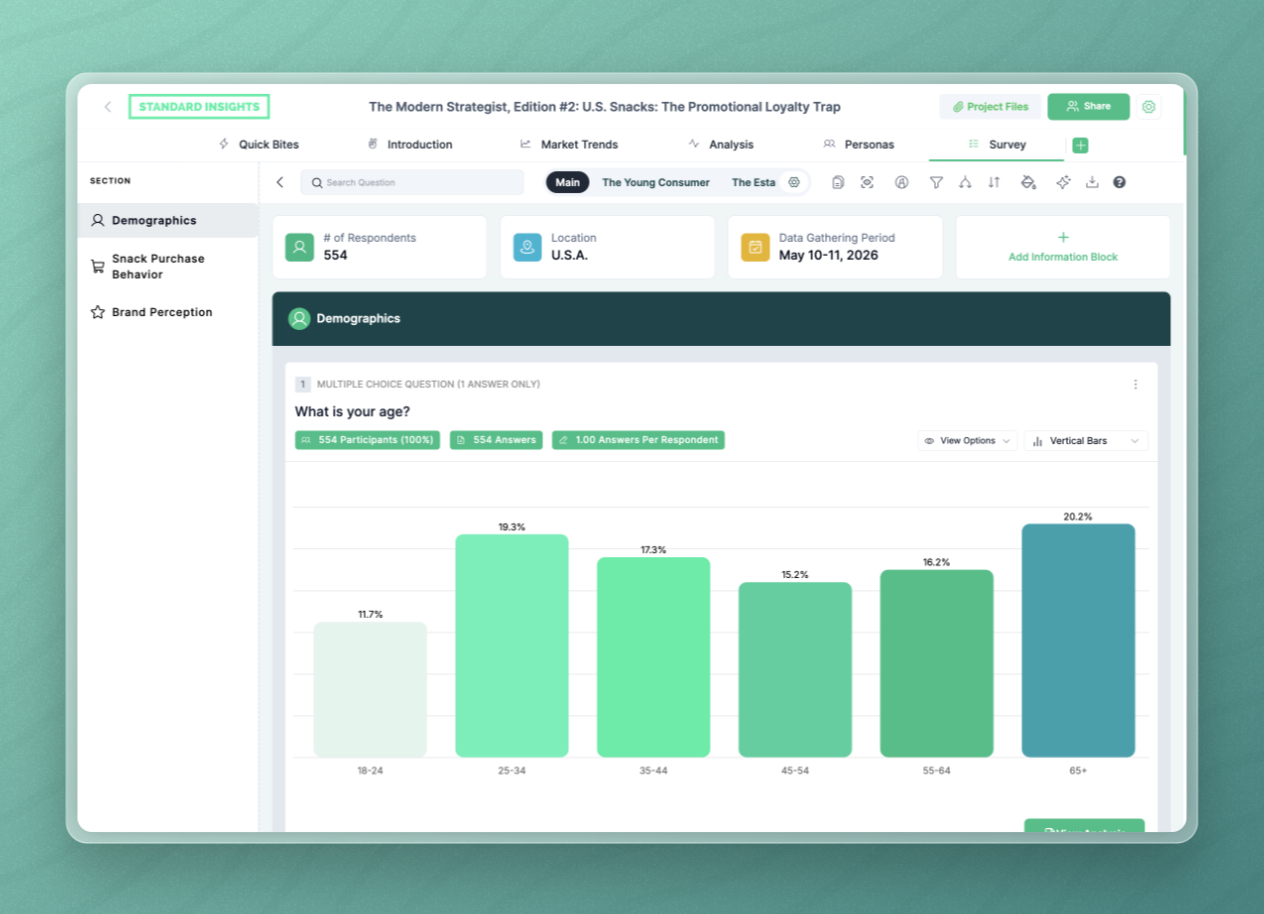
Full Report Underneath
And the full report, if the answer raises another question.
The dashboard is the fast read. Behind it sits the complete report - segment cross-tabs, personas, verbatim responses, market context, and every question exactly as it was answered.
See what's in a full report →From your concepts to a decision, in three steps.
You do one of them. We do the other two. No scoping call, no proposal to review, no methodology to approve.
In just a few minutes.
-
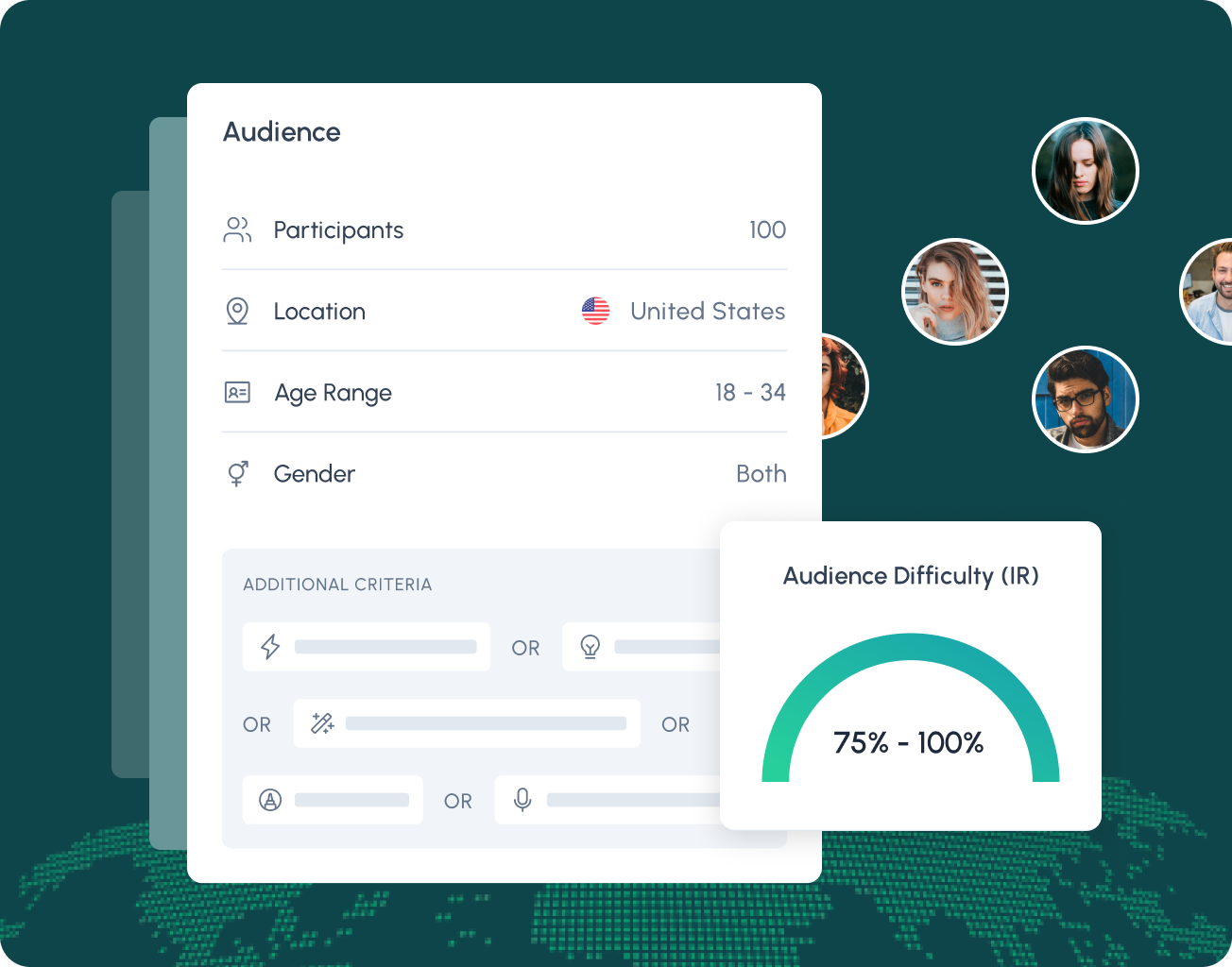
Up to four concepts per study - text, image, or
video
-
One short form, or talk it through with our AI
and we set it up for you
-
Name your audience: market, age, category
behaviour, purchase history
-
Price shown before you pay, not after. Per
study, no retainer, no minimum


Why the verdict holds up.
A cheap answer that's wrong costs more than an expensive one that's right. Here's what sits behind the word at the top of the screen.
Who answers
- 170M+ verified consumers across 130+ markets, from Kantar Profiles, Cint and Dynata
- Never synthetic. Every response comes from a verified human, not a model
- Screened to your audience on category behaviour, purchase history, or any criterion you name
- 150 respondents minimum, so segment cuts still carry a usable base
How it's checked
- Geolocation and device checks confirm respondents are where they claim to be
- Speed detection removes anyone who rushed the questionnaire
- Consistency screening flags contradictory answers before analysis
- You get the sample you ordered. Order 300, receive 300 clean responses - removals are on us
How the verdict is reached
- A framework built by research analysts - question wording and scales fixed in advance, so results stay comparable
- The same thresholds every time. The verdict isn't an opinion about your concept, it's where the scores landed
- An analyst review before delivery. Automation does the volume, a person signs off the conclusion
- Base sizes on every cut, so you can see what a segment finding actually rests on
You're a good fit if
You're not a good fit if
Concept Testing: your questions, answered.
What decides the verdict?
Where the four core metrics land against thresholds set in advance - the same ones for every Concept Testing study. It isn't a judgement about your idea, and it isn't adjusted to match what you were hoping for. An analyst reviews it before delivery, but the framework decides it.
How many concepts can I test?
Up to four per study. Need more? We'll scope it with you.
What if the verdict is "don't run it"?
Then the report names which metric failed and what the opportunities section says people would change - and you've spent $1,490 instead of the production and media budget. That's the study doing its job, not failing at it.
Can I test outside the US?
Yes. We reach real consumers across 130+ markets - tell us where, and we'll match your audience there.
Do I need to write the questions myself?
No. The questionnaire comes with the module. If you want control over your own custom questions, that's what Your Questions, Our Audience is built for.
Is there a minimum number of respondents?
Yes - 150.
How fast is delivery for a niche audience?
24 hours for a broad audience, up to 5 days for a low-incidence one.
What format do I receive the results in?
A structured report you can read online, plus PowerPoint, PDF and Excel exports - ready to share or drop straight into your own deck.
Ready to launch.
The fastest way to an answer.
Whatever you're deciding, there's a study designed for it.
Test concepts, messages, and creative before you commit budget.
You're here - Concept TestingTest the finished creative against a control group, before the media spend.
See Brand Lift →Measure what your campaign actually changed.
See Campaign Evaluation →Track awareness, perception, and share against competitors.
See Brand Tracking →See the category landscape before you plan.
See Usage & Attitudes →Build real audience segments from real consumer data.
See Audience Profiling →Find out before you spend.
Set your concepts and your audience - the verdict is back in 24 to 72 hours. $1,490 per study.