
Always-on brand tracking.
Your brand, measured every day of the year.
Twelve waves. The same questions, the same audience, every month. So you're always reading where your brand is now — not where it was the last time somebody checked.
Usually ordered when: brand spend is continuous, and the results get defended once a year on a number nobody in the room can source.
A number tells you what.
A series tells you when.
Awareness is 38%. Fine. Now the questions that actually matter: was it 45% in March? Which month did it start dropping? Was it the competitor's launch, or your own media going dark in August?
A single study can't answer any of that, however good it is.
Not a limitation of the study — a limitation of having one point.
A position.
Where you stand, measured properly. Your funnel, your perception, your buyers, your competitors on all of it.
Complete, and enough for most decisions.
A date.
The same measurement, monthly, so every shift has a month attached to it.
That's what connects the line to the decision — because you know what you did in that month.
This is also why the questions are locked. Reword one between waves and you haven't improved the tracker, you've reset it.
Need a position rather than a direction? See Brand Health, from $4,990 →
Six sections, each one moving.
Every wave is a complete read. What you're buying is what appears when they sit end to end.
Talk to UsFunnel & performance.
- Funnel trend lines, month by month
- Your reach gap widening or closing
- Your movement against the category's
Perception & channels.
- Attribute shifts, and which brand gained what you lost
- Ad recall read against your own media calendar
- Positioning territory changing hands
Buyer profile & habits.
- Whether your buyer is changing shape
- Rotation and loyalty tightening or loosening
- Word of mouth building or decaying
01 - Overall performance
Your line, against theirs.
Every funnel metric, satisfaction and share of voice, plotted across the year with your competitive set on the same chart. One read tells you you're behind on reach. Twelve tell you whether you're catching up.
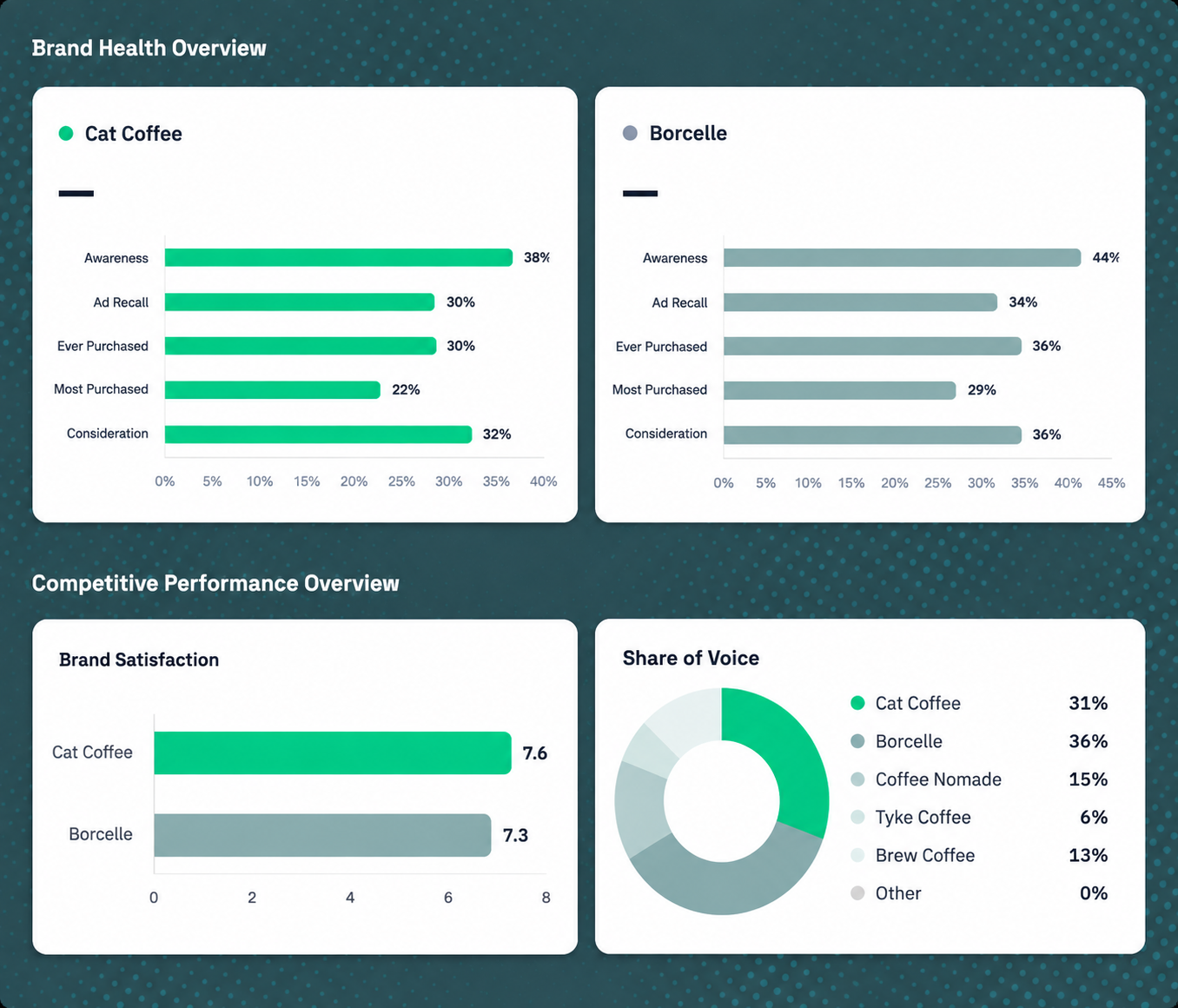
02 - Brand funnel
Which leak got worse.
Awareness, ad recall, ever purchased, most purchased, consideration, advocacy, differentiation — each with its own trend. The finding is which drop deepened while you were spending against it.
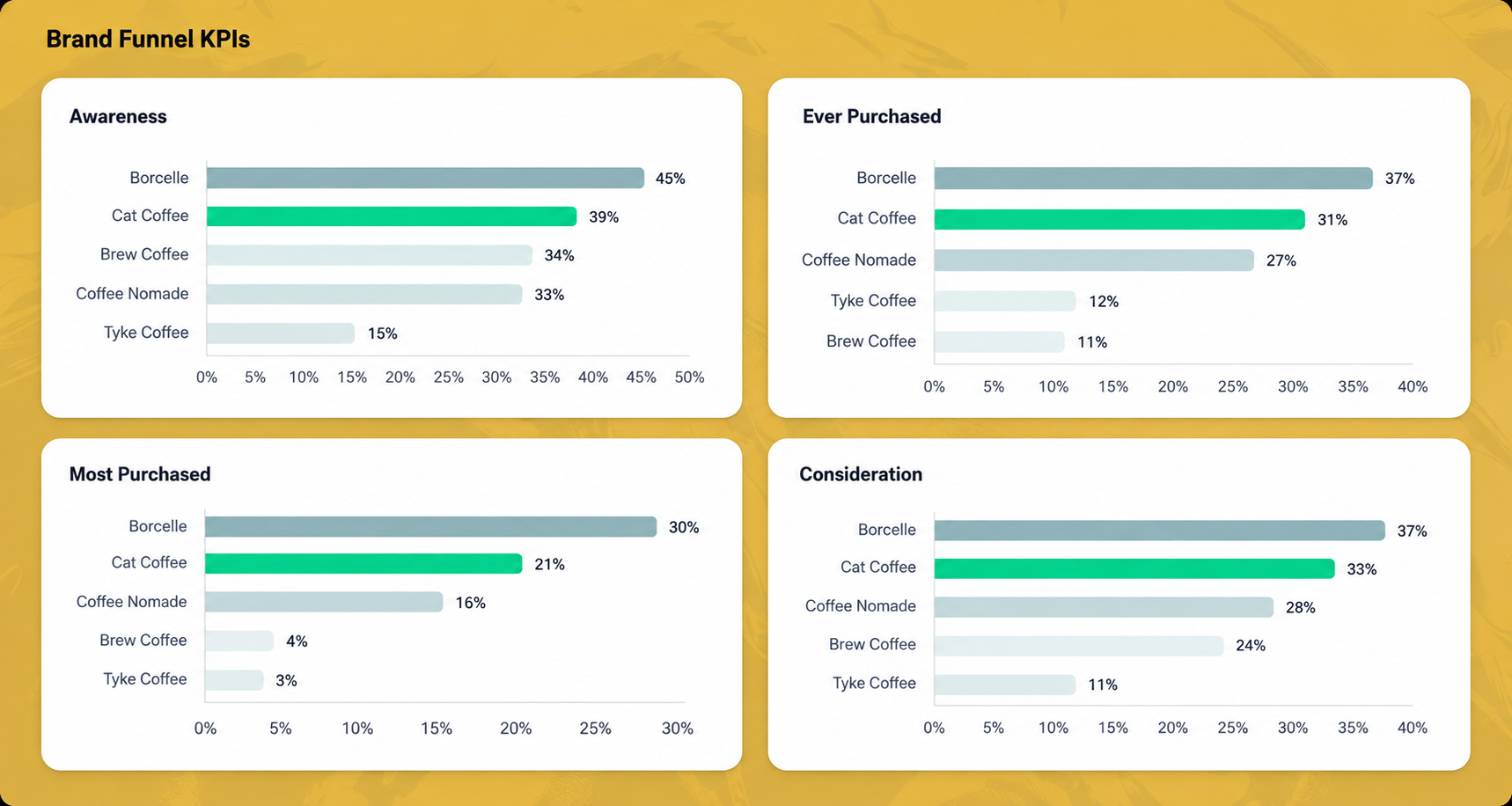
03 - Brand attributes
What you're becoming.
Attributes attach slowly. Over a year you can watch a repositioning land — or watch the attribute you invested in migrate to a competitor.
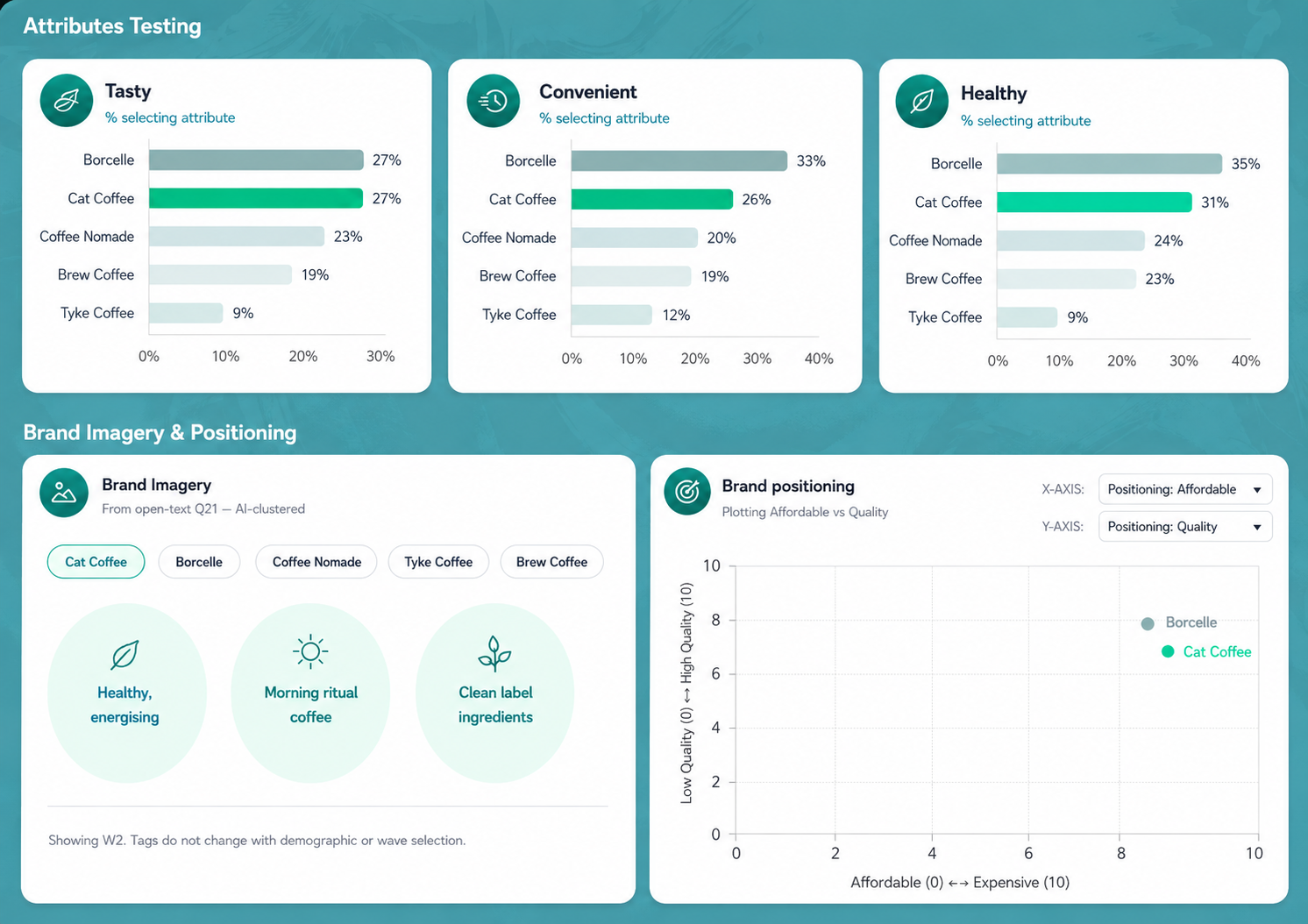
04 - Advertising and touchpoints
Whether the media plan showed up in the data.
Ad recall by month, against what you had in market. This is the section that connects spend to memory, and it makes the budget conversation short.
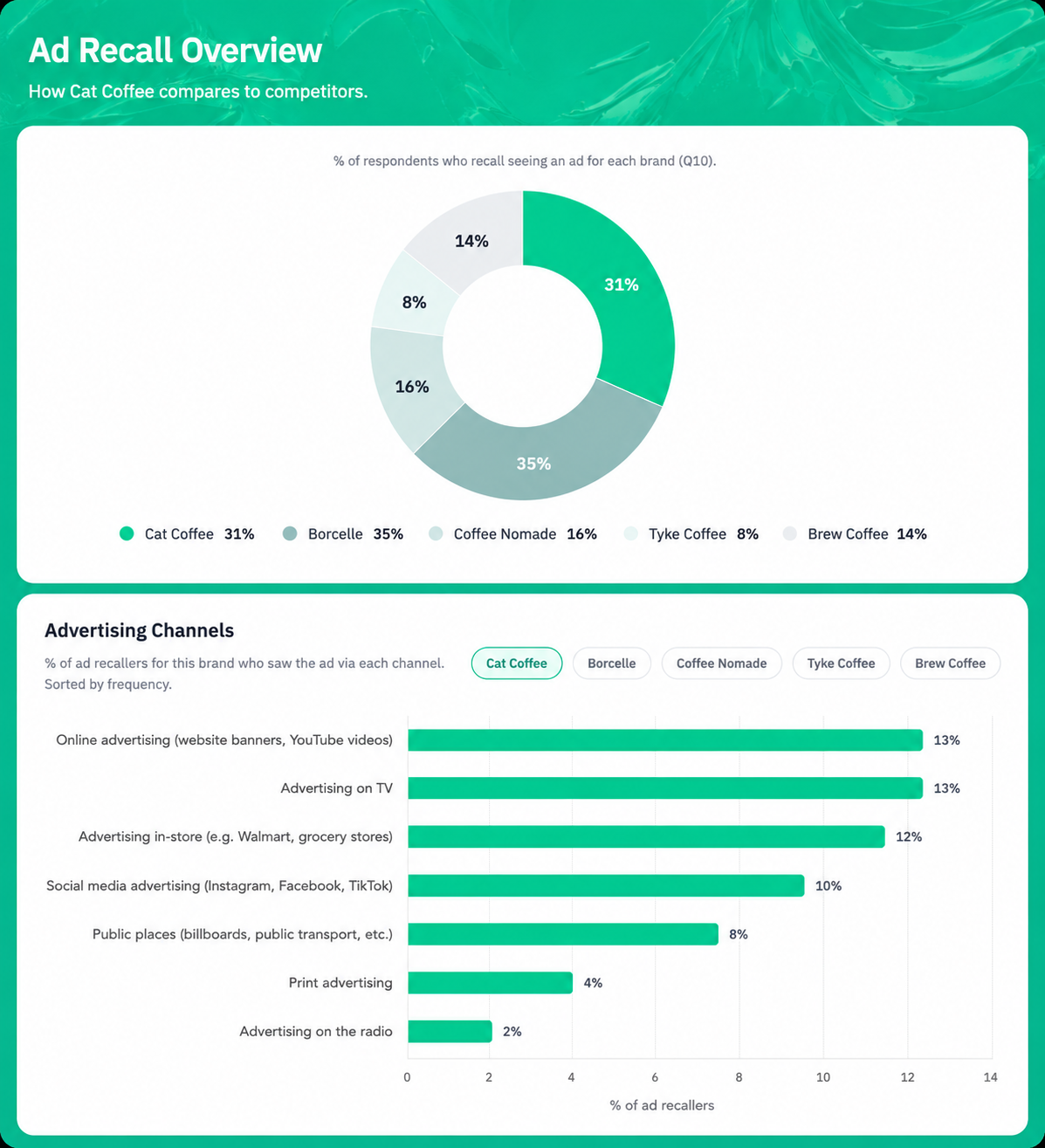
05 - Shopping and usage habits
Whether behaviour followed perception.
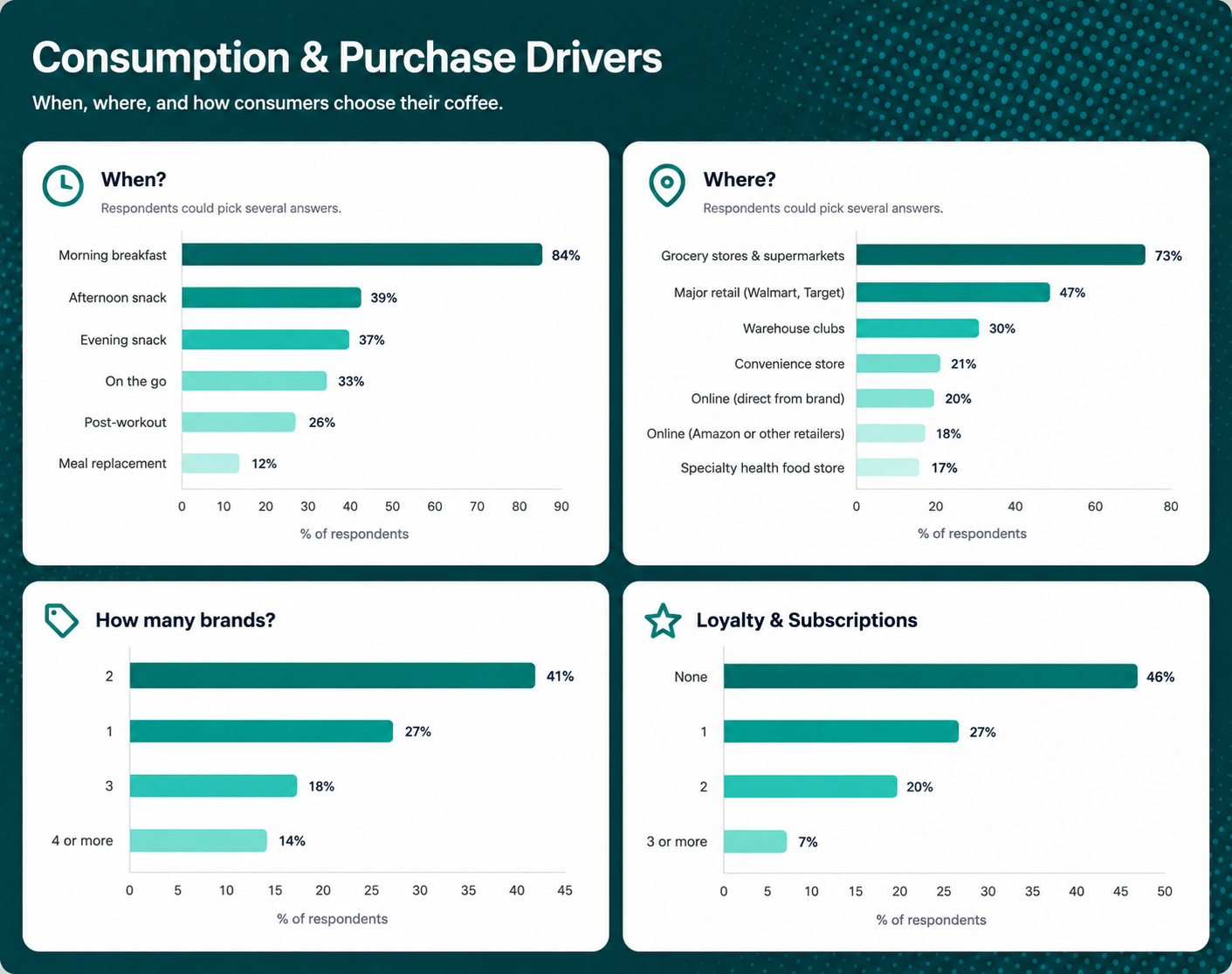
Rotation, occasions, loyalty and word of mouth across the year. Perception usually moves first and behaviour follows months later. You can only see that gap with months to look at.
06 - Brand profile
Whether your buyer is drifting.
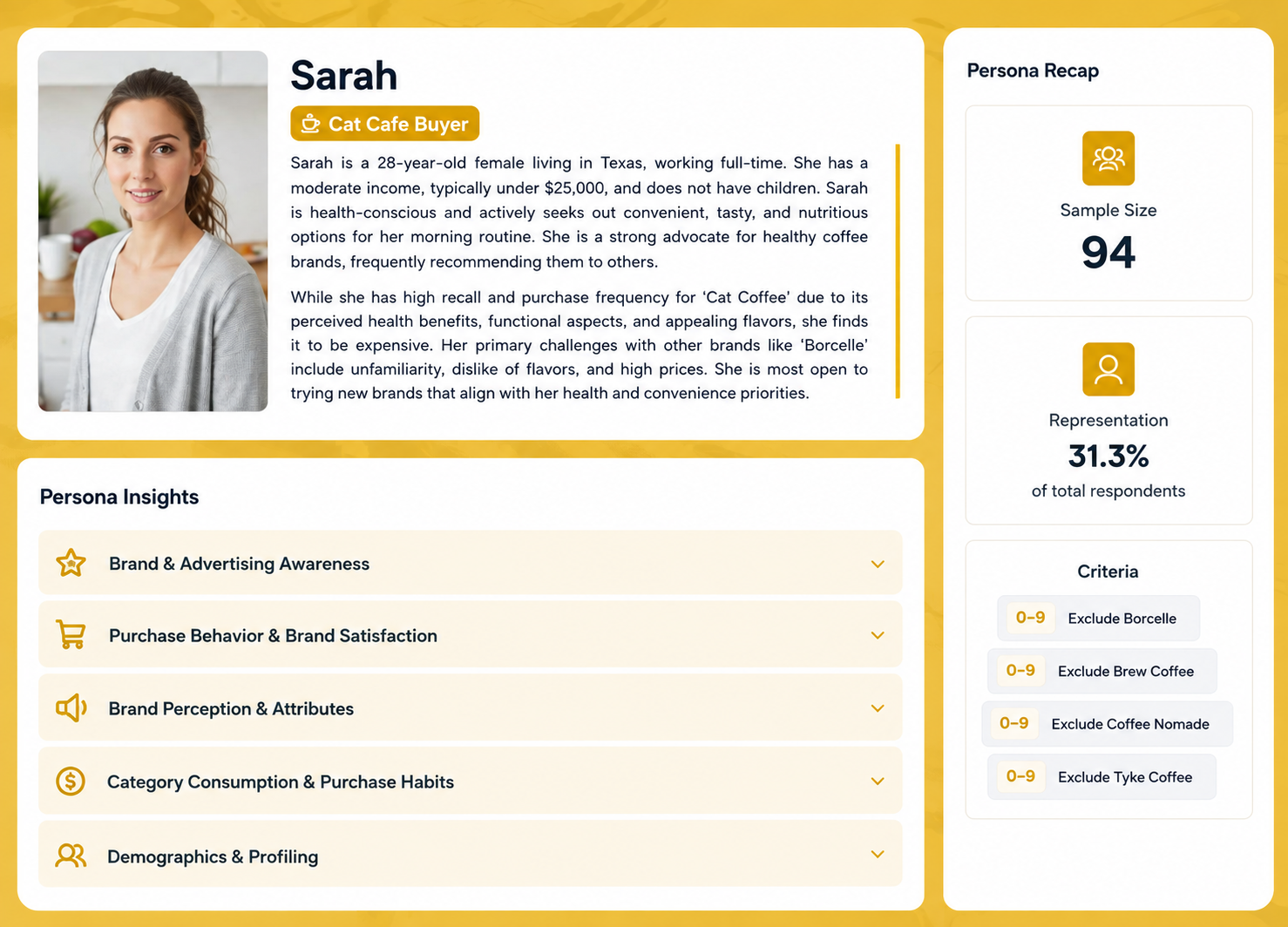
Who's choosing you now, against who was choosing you in month one. Audience drift is slow, expensive, and invisible until there's a line.
Plus a written read every quarter.
Not twelve isolated summaries. Every quarter, an analyst read of what the line is doing, what in the market explains it, and what it doesn't prove.
Twelve waves, one price,
agreed before it starts.
You'll hear "annual" and think retainer. It isn't one. Twelve waves is a defined deliverable at a fixed price, known before anything begins — the same way every study here works.
We run it. There's nothing for your team to operate.
Included, from $19,990/year:
- Twelve monthly waves, 300 respondents each — 3,600 responses across the year
- Up to five competitors, measured alongside you in every single wave
- The full anatomy every wave: funnel, perception, advertising and touchpoints, habits, buyer profile
- The same questions and the same audience definition, month after month
- Two custom questions per wave, on top of the fixed set
- Trend lines and wave-over-wave deltas from wave two
- A written analyst read across the series every quarter
- Every wave delivered as a finished report, presentable as it lands
- Live link plus PowerPoint, PDF and Excel exports
Options:
- Additional markets — run the same series in several countries in parallel, on the same questionnaire, so the countries are readable against each other rather than separately commissioned and impossible to compare
- Additional competitors beyond five, where your set is wider
- Unaided awareness, added at setup so it runs from wave one
- Extra attitude statements alongside the standard perception set
- Prospective consumers — a tracked read on people outside your category entirely, telling you whether the category is growing separately from whether your share is
Why it starts with a conversation:
The price depends on your competitive set and how hard your audience is to reach. A five-brand category with a broad audience and a twelve-brand category with a low-incidence one aren't the same study. So we scope it with you and give you the full-year price before you commit to anything.
Talk to UsSet up once. Then it runs.
The only part that takes thought.
- Name your brand and your competitive set
- Choose the perception attributes, or leave them and we build them from your category
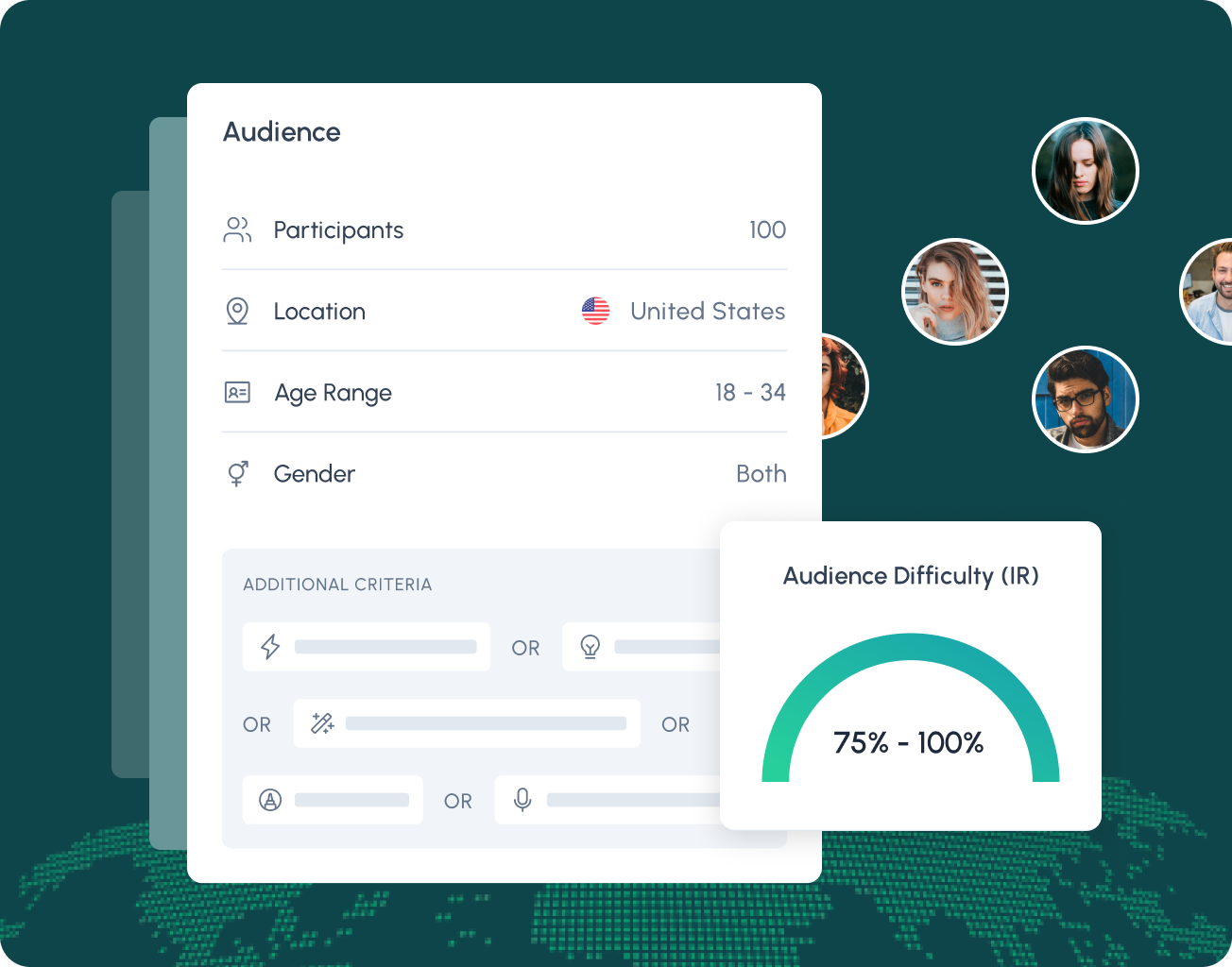
- Define your audience — nationally representative, or a specific profile
- We design the screening, so the same kind of person qualifies in month eleven as in month one
- Pick your markets. Several run in parallel on one questionnaire
Done once, then fixed. That's the entire point of it.


Why the line means something.
A tracker is only as good as its consistency. Change the sample, the wording or the audience between waves and the movement you're reading is your own method.
Who answers
- 170M+ verified consumers across 130+ markets, from Kantar Profiles, Cint and Dynata
- Never synthetic. Every response comes from a verified human, not a model
- 300 per wave, never fewer. Reducing it wouldn't reduce the price, because it would break the series
- The same audience definition every wave, so you're tracking your brand rather than a moving target
How it stays comparable
- Question wording fixed across all twelve waves. Nothing quietly reworded between reads
- Competitors measured in the same wave as you, on the same questions — not your figures against someone else's published benchmark
- Screening locked at setup, so the qualifying respondent doesn't drift
- One questionnaire across markets, so the countries compare
- You get the sample you ordered. Order 300, receive 300 clean responses — removals are on us
How it's read
- Analyst notes every wave, and a written read across the series every quarter
- Including what the data doesn't prove. Where a movement is too small to call, the notes say so
- Base sizes on every cut, so you can see what a segment reading rests on
- Presentable as it lands, not a dataset your team has to build a deck from
You're a good fit if
You're not a good fit if
Brand tracking, answered.
What is brand tracking?
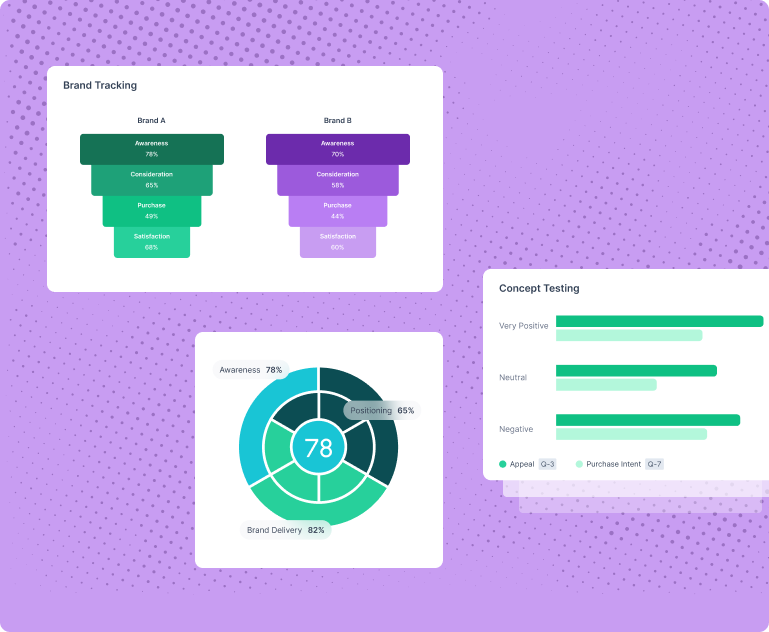
Brand tracking measures brand health at fixed intervals using the same questions, the same audience definition and the same method every time, so a change in the number is a change in your brand rather than a change in the method. Here it runs as twelve monthly waves across a year — 300 respondents per wave, 3,600 across the series — covering the full funnel, perception attributes, advertising and touchpoints, shopping habits, buyer profile and up to five named competitors. From $19,990/year.
How much does brand tracking cost?
From $19,990 a year for twelve monthly waves. The final price depends on your competitive set and how hard your audience is to reach, so it's scoped with you — and you get the full-year price before you commit.
Is this a retainer?
No. Twelve waves is a defined deliverable at a fixed price, agreed before it starts. Nothing renews automatically, nothing meters, nothing gets billed by the hour.
Why monthly?
Because the useful finding is usually a date, not a number. Knowing awareness fell is worth little; knowing it started falling in April, when your media went dark and a competitor launched, is worth the year. Months give you that. Longer gaps give you a change with no explanation attached to it.
Why does it cost more than a brand health study?
Because it answers a question a single study structurally cannot. A snapshot tells you where you are. Only a series tells you whether what you did worked, and when it started working.
Should I start with a brand health study instead?
If your question is "where do we stand," yes — and it's a complete answer, not a trial. Brand Health measures your position in full, from $4,990. Start here instead if your question is "is it working."
Can I buy a single wave?
A single wave is a brand health study, and you can order one online from $4,990. What isn't sold is a tracker one wave at a time, because that produces trend lines nobody can defend.
Why 300 respondents per wave?
Below that, both the segment cuts and the month-to-month differences stop being reliable. It never scales down.
Can I change the questions between waves?
Not the core set — that's what makes it a tracker. Two custom questions per wave sit on top of it, so you can ask what's live this month without touching the line.
How many competitors can I track?
Five as standard, measured on the same questions in the same wave as you, every month. More can be added where your set is wider.
Can I track several countries?
Yes, in parallel, on one questionnaire — which is what makes the markets readable against each other. Each is sized and priced for its own market, and the whole set moves together month by month.
Is unaided awareness included?
It's an option rather than part of the standard set. Add it at setup so it runs from wave one — added later, the earlier waves won't have it.
What are prospective consumers?
People outside your category entirely — not your non-buyers, who are already in the sample. Tracked across the year, they tell you whether the category itself is growing, separately from whether your share is.
When should I start?
Before the thing you want to measure. A tracker that starts after the relaunch, the campaign or the competitor's entry tells you where you ended up, not what moved you there.
What happens at the end of the year?
Every report is yours. You renew, pause, or stop. If you renew, year two reads against year one — which is when a tracker starts being genuinely valuable.
These answer a question.
This one answers whether it worked.
Test concepts, messages, and creative before you commit budget.
See Concept Testing →Test the finished creative against a control group, before the media spend.
See Brand Lift →Measure what your campaign actually changed.
See Campaign Recall →Measure your funnel, perception and position against your competitors.
See Brand Health →Build real audience segments from real consumer data.
See Audience Profiling →See how your category behaves before you plan.
See Usage & Attitudes →A year of brand spend deserves a line, not a number.
Tell us your category, your competitive set and who you're measuring among. We'll scope the year and give you the price before anything starts.