
Picture of By Standard Insights
By Standard Insights

Private Label Snacks — US Market Snapshot

45.5% of consumers stock up during a name-brand promotion and return to the cheaper option the moment it ends — discounting is renting volume, not rebuilding loyalty.

What's inside?

Standard Insights surveyed 554 US adults — nationally representative by age, gender, and region — on their packaged snack purchase behavior, brand perceptions, and switching dynamics between national brands and private label. The survey was designed around one diagnostic: are consumers who have migrated to store brands making a permanent decision, or a reversible one — and what would it take to bring them back. Senior marketers will leave with a clear read on which consumer segment is recoverable, which is gone, and what the only viable path back to each looks like.

The Spending Shift

Price difference is the primary trigger for switching to store brands for 73.5% of consumers — not a minority grievance, nearly three in four. At the same time, 38.1% demand clear proof of a meaningful taste or quality difference before considering a return to premium pricing. The implication is direct: legacy brand equity is no longer doing the work that national snack brands have historically relied on it to do.

The Promotional Loyalty Test

The survey introduced a concrete behavioral test: following a price promotion, does the consumer stay with the name brand or return to private label? Only 12% of lapsed buyers stay after a promotional period ends, compared to 35% of active buyers — a 23-point gap that confirms promotions are rewarding existing purchasers while temporarily renting share from everyone else. The margin cost has no recovery attached to it.

The Brand Battlefield

The attention versus trust plot across all 15 tested brands surfaces where category conviction is concentrating and where scale is quietly becoming a liability. Siete Family Foods leads the Earned Authority quadrant with a trust score of 254 on efficient attention — insulated from private label pressure because the purchase is an identity decision, not a price comparison. Frito-Lay and Mondelēz both carry extreme fatigue rates (289 and 283 respectively), generating reach without conviction — the signature position of a brand actively giving consumers permission to look for alternatives.

The Buyer Gap

68% of lapsed buyers have cut snack categories entirely, versus 20% of active buyers — a 48-point gap that removes the standard recovery assumption. These consumers are not trading down to a competitor or a store brand. They have left the aisle. There is no redirected spend to intercept with a better promotional offer, which means the standard CMO playbook is solving for a segment that no longer exists in that form.

The Income Signal

88% of households earning under $50,000 switched to store brands because of price — versus 62% of households earning $75,000 or more. The cost-of-living squeeze has effectively eliminated brand loyalty at the lower income tier, turning national snack brands into pure commodity for that segment. The strategic opportunity sits in the higher-income bracket, but the barrier there is not aspiration. It is verifiable quality proof — a product argument, not a marketing one.

The 4 Consumer Personas

Four consumer archetypes emerged from the data, each requiring a structurally different response: the Price Evacuee (lower-income, brand loyalty eliminated by economic pressure — not recoverable through marketing), the Skeptical Upgrader (willing to pay more, but only for a demonstrable sensory advantage), the Values-Led Buyer (18–34, for whom clean ingredients and cultural identity are table stakes, not differentiators), and the Category Exiter (has stopped buying packaged snacks altogether — no promotional mechanic reaches this segment). Understanding which persona your current buyer base skews toward determines whether a brand's problem is pricing, product, or positioning.

How to get the most out of this report

This is an interactive report — not a static PDF — which means you can interrogate the data directly rather than read through findings that may not map to your specific category or brand situation.

Here is what to use:

Frame 2087324520 14

Chat with the data

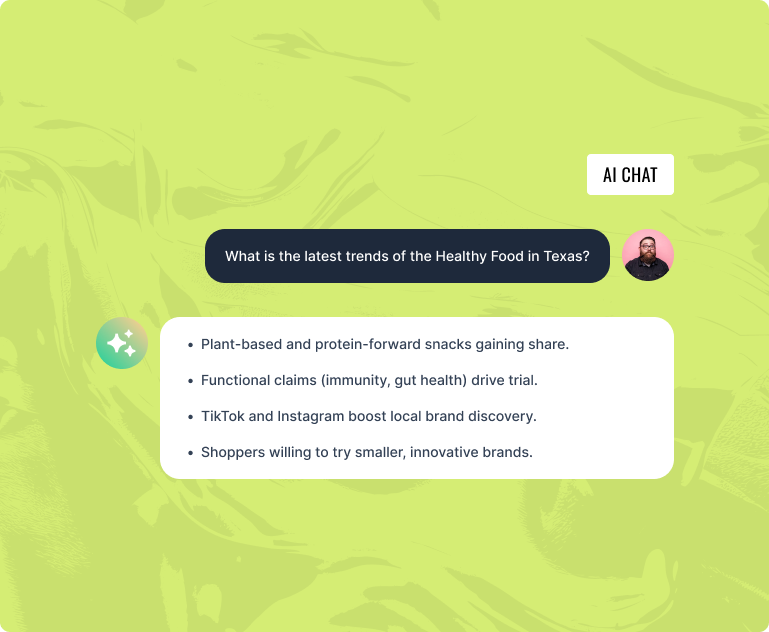
Every section of the report includes an AI assistant button that answers direct questions about the findings. Ask it: "What percentage of households earning over $75,000 still switched to private label?" or "How does Siete Family Foods' trust score compare to Frito-Lay's fatigue rate?" The assistant answers from the data. It does not generate strategy recommendations — that interpretation is yours.
Frame 2087324520 10

Filter and segment

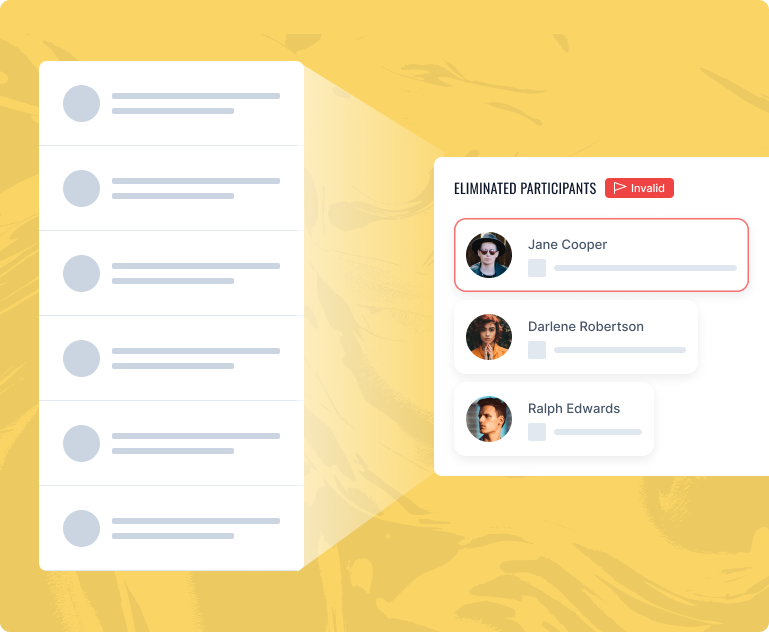
Every finding is filterable by age, gender, income, and buyer status. The full-sample numbers are the starting point. The actionable findings are in the segment breakdowns — particularly the Active Buyer versus Non-Buyer split, where the 48-point category exit gap and the 23-point post-promotion loyalty gap are most visible. If you are a brand targeting a specific income tier or age cohort, the filtered view is where the relevant signal is.

About the data

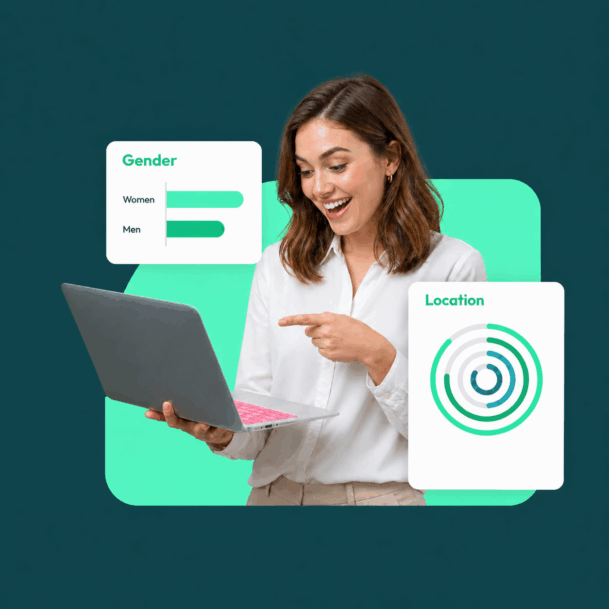
In May 2026, Standard Insights surveyed 554 US adults — nationally representative by age, gender, and region — on their packaged snack purchase behavior, brand perceptions, and attitudes toward private label switching and recovery.

All respondents were 18 or older. The survey was fielded using Standard Insights’ nationally representative panel methodology — no opt-in convenience sample, no social media recruitment bias. To ensure data quality, the survey included attention checks and consistency traps. Respondents who did not pass these checks were excluded from the final analysis. Active Buyers (those who purchased packaged snacks in the last 6 months) account for 507 respondents (92% of total N). Non-Buyers (those who opted out of snack purchases recently) account for 47 respondents (8% of total N). Active Buyer and Non-Buyer sub-group percentages are calculated as a share of each respective sub-group; all other percentages are calculated as a share of total N (554).

The brand matrix covers 12 of the 15 brands listed in the survey instrument. Three brands were excluded from all brand analysis due to category misclassification in the survey instrument and received no usable responses within this study’s scope. Note: Siete Family Foods was acquired by PepsiCo in 2023. Frito-Lay, a PepsiCo division, is listed separately in this survey as a Legacy Giant. Consumer perception data for both brands reflects independent consumer-facing identity at the time of fieldwork and is treated as such throughout the analysis.

For a custom study built around your specific brand, category, or switching dynamic, explore Standard Insights or contact the team directly.

ChatGPT Image May 4 2026 01 26 22 PM

More Reports